Destinations Italy Umbria & Le Marche
Italy · Umbria · Le Marche

Umbria & Le Marche

25 restaurants
12 hotels
20 things to do
2 regions

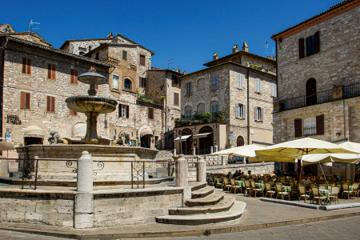
The green heart of Italy and its overlooked sibling. Tuscany without the prices, and twice as wild. Umbria is hill towns and Saint Francis and Sagrantino — Assisi, Orvieto, Spello, Spoleto, all medieval, all on top of something. Le Marche is the coast and the Apennines and the best fried olives in the country. Truffles in Acqualagna. Piero della Francesca in Urbino. A Renaissance palace, a three-Michelin-starred fish restaurant on a beach, a stone monastery with no Wi-Fi. Skip the crowds. Eat slowly. Drive.

A note from Hala

Two regions in one guide. They share a border, a sensibility, and a reluctance to be discovered — and they make sense together. Umbria is the green one. Landlocked, hilltop, holy, full of Saint Francis and Sagrantino wine and silent monasteries that take in paying guests. Le Marche is the one nobody can pronounce — Lé Mar-kay — facing the Adriatic on the east side of the Apennines, with Renaissance palaces inland and Michelin-starred fish on the coast.

Both regions punch far above their weight on food, art, and landscape, and far below on crowds and prices. You'll come for Tuscany-without-Tuscany and stay because everyone in the trattoria knows the name of the cook's grandmother. Rent a car. Stay in farmhouses. Eat in the village you can see from your terrace.

Tuscany without the crowds. Or the prices. Or the bus tours.
Quick take

Best from mid-May through late June and again September through mid-October. Wildflowers in spring; truffle season starting in autumn; the light is soft and golden both. July is hot but doable, August is hot, packed, and half the family-run trattorias close around Ferragosto (15 Aug). November–March is moody, quiet, cheap, and surprisingly good — truffle fairs in Acqualagna and Norcia, fewer people, working countryside.

Know before you go

The regions.

Six anchor towns, two regions, one road trip. Umbria runs west of the Apennines — Assisi, Spello, Orvieto, Spoleto in the south, with Perugia as the (sometimes-skipped) capital. Le Marche sits east — Urbino in the hills, Ascoli Piceno in the south, Senigallia on the coast. Don't try to do all six in a week. Pick three. Drive between them. Stay at least two nights anywhere worth seeing.

A hand-drawn black truffle and olive branch
01

Assisi & Spello

Saint Francis · pink stone · flower festival

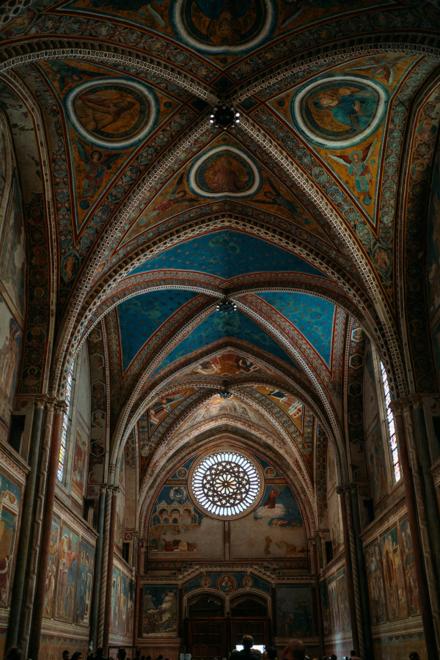
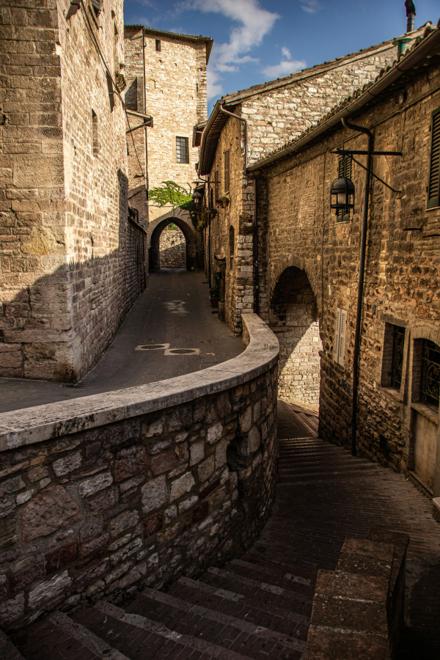
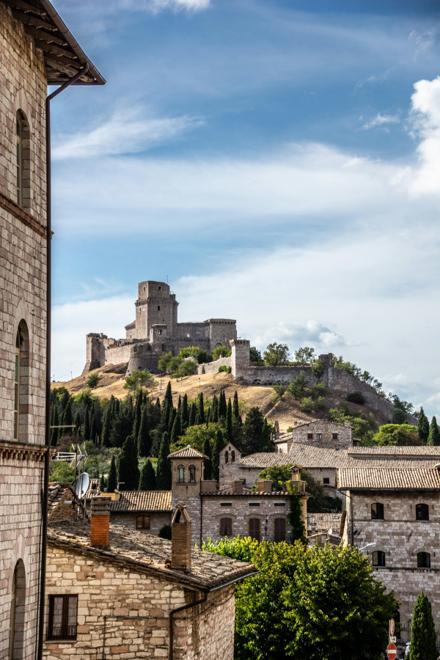
The Saint Francis basilica is the headline — Giotto and Cimabue frescoes, a pilgrimage site for 800 years, and worth every minute even if you've never set foot in a church. The town itself is pink-stoned and built into the side of Monte Subasio. Twenty minutes downhill, Spello is the quieter, prettier sister — Roman walls, Pinturicchio frescoes inside Santa Maria Maggiore, and a flower festival in late spring (the Infiorate, around Corpus Domini) where the locals cover the streets in petal carpets. Stay in Spello, day-trip to Assisi.

UNESCOPinturicchioStay Spello
02

Orvieto

Cliff-top tuff city · cathedral · underground

Built on a vertical slab of volcanic tuff stone in southwestern Umbria, ninety minutes by train from Rome and impossible to forget once you've seen it. The cathedral facade is one of the great pieces of Gothic in Italy — striped marble, mosaics, the Signorelli Last Judgement frescoes inside the chapel of San Brizio. Below the town, a network of Etruscan caves and wells you can tour. Orvieto Classico, the white wine, is everywhere and cheap. A great first or last stop coming from or going to Rome.

Easy from RomeUnderground toursDay or overnight
03

Spoleto & Montefalco

Roman bridge · Sagrantino wine country

Spoleto is a Roman-Lombard-medieval layer cake with the Ponte delle Torri — a 14th-century aqueduct-bridge spanning a wooded gorge — as the cinematic stop. The summer Festival dei Due Mondi (late June through mid-July) brings opera, theatre, dance. Twenty minutes north, Montefalco is the "balcony of Umbria" and the centre of Sagrantino — a tannic, age-worthy red made from a grape that grows almost nowhere else. Drive between the two and stop at any cantina with the sign out.

SagrantinoSummer festivalDrive between
04

Urbino & the Marche hills

Renaissance jewel · Piero della Francesca · truffles

The hill town that gave us Raphael and Bramante. The Palazzo Ducale, built for Federico da Montefeltro in the 1460s, is one of the most important Renaissance buildings in Italy — and the gallery inside has Piero della Francesca's Flagellation, one of the most studied paintings in Western art. Forty minutes south, Acqualagna produces two-thirds of Italy's truffles. Combine the two: Renaissance art in the morning, truffle tagliatelle for lunch, a slow drive through the hills back.

Palazzo DucaleTruffle fair NovHill driving
05

Ascoli Piceno

Travertine piazza · olive ascolane · aperitivo town

The southern Marche town nobody talks about and everyone should. Piazza del Popolo is paved in travertine that shines after rain, lined with Renaissance arcades, and built around the Art Nouveau Caffè Meletti — where Hemingway and Sartre once drank anisette. The olive ascolane (fried, stuffed green olives) were invented here and are still the best version anywhere. Stay two nights. Eat olives at six. Walk the piazza after dark.

Caffè MelettiOlive ascolaneUnderrated
06

Senigallia & the coast

Velvet beach · five Michelin stars · summer only

A long, flat sand beach on the Adriatic — nicknamed the "spiaggia di velluto" (velvet beach) for the texture of the sand — and home to two of the most important fish restaurants in Italy: Mauro Uliassi's three-Michelin-starred Uliassi and Moreno Cedroni's two-starred Madonnina del Pescatore. Book months ahead in summer; both are 35-minute drives from each other on the same stretch of coast. The old town is small, walkable, and underrated. Mostly a summer destination (May–Sept); winter is sleepy.

Book aheadMay–SeptBeach + Michelin
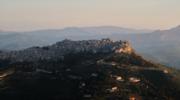
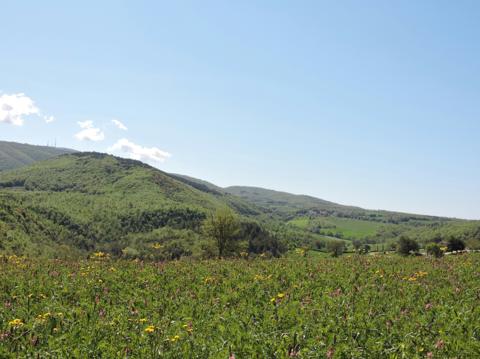
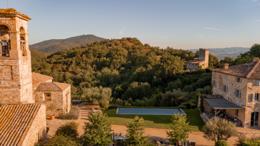
Umbrian hills
The Green Heart

Olive groves, oak forest, a road that never quite straightens out.

Where We Eat

The table.

Umbrian and Marchigiano food is what Tuscan food pretends to be — quiet, regional, defended by people who learned it from their grandmothers. Wild boar, black truffles from Norcia, lentils from Castelluccio, pecorino aged in walnut leaves. On the Marche side, add Adriatic fish, the world's best fried stuffed olives, and a baked layered pasta called vincisgrassi that's basically lasagna with more confidence. Five categories: pastry stops, family trattorias, the splurges, fish on the coast, and the sweet finish.

Coffee · Bakery · Hand-Food

Mornings are a cappuccino at the bar. Lunch — when you don't want a sit-down — is something hand-held: olive ascolane in Ascoli, porchetta from a van outside Assisi, crescia in Urbino. Stand at the counter, pay half. The four below are the anchors.

Caffè Meletti, Ascoli Piceno — swap for photo

Caffè Meletti

€€
Must orderanisetta + olive ascolane

The Art Nouveau caffè on the corner of Piazza del Popolo in Ascoli Piceno (since 1907, a Patrimonio Storico, Hemingway and Sartre passed through) — Liberty mirrors, marble counters, gilt lettering, a terrace onto one of Italy's prettiest squares. Order the Meletti Spritz and chase it with a few olive all'ascolana — the fried meat-stuffed olives invented in this town. Open 8 a.m.; good for first coffee and last drink.

Ascoli · Piazza del PopoloSince 1907Historic landmark
Visit website ↗
Sandri 1860, Perugia — swap for photo

Sandri 1860

€€
Must ordertorciglione + cappuccino

Perugia's historic pasticceria on Corso Vannucci since 1860 — frescoed ceilings, gilt, marble, glass cases of pastry, the same families across three generations. Order the torciglione (snake-shaped almond paste, an Umbrian Christmas sweet made year-round) or the rocciata (Umbria's answer to strudel, rolled with apples, walnuts, raisins). The single-breakfast pick in Perugia; closed Mondays in low season.

Perugia · Corso Vannucci 32Since 1860Closed Mon
Visit website ↗
Migliori Olive Ascolane — swap for photo

Migliori Olive Ascolane

Must orderolive ascolane + crema fritta

The takeaway window on Piazza Arringo making the platonic ideal of olive ascolane — large Ascolana Tenera olives pitted and stuffed with pork, veal, chicken, parmigiano, nutmeg, breaded and fried to order. A family in commerce since the mid-19th century. Order a paper cone with a few crema fritta (fried custard cubes) for the salty-sweet move; eat standing in the piazza, cash faster than card. Sells out by mid-afternoon on weekends.

Ascoli · Piazza Arringo 1Cash easierTakeaway only
Visit website ↗
Porchetta di Costano — swap for photo

Porchetta di Costano

Must orderporchetta panino, wild fennel

The Lunghi family's porchetta van — three generations roasting whole pigs over wood with wild fennel and garlic in Costano, a frazione of Bastia Umbra. They show up at markets across Umbria each morning (Spello, Foligno, Perugia, Assisi — check the Facebook page for the day's location). Order the panino with extra wild fennel and a plastic cup of red wine; the skin is the move. Cash; sells out by 2 p.m.

Bastia Umbra (Costano) · markets across UmbriaCash onlySells out by 2 p.m.
Visit website ↗

Trattorie · Family-Run · Where Locals Eat

The category that earns the trip. Hand-rolled pasta, cinghiale (wild boar) ragù in winter, lamb in spring, truffle shavings on everything in autumn. Marche adds vincisgrassi (baked pasta, layered, ragù'd, sometimes truffled) and ciauscolo, a spreadable salami you put on warm bread. Most of these are family-run, small, and serious. Book.

L'Antica Osteria, Montone — swap for photo

L'Antica Osteria

€€
Must ordertagliatelle al tartufo

A family osteria on the main piazza of Montone — the tiny walled hilltop town (1,600+ people, 25 min from Perugia airport) where Sir Terence Conran kept a house and the Umbria Film Festival has run since 1997. Order tagliatelle al tartufo nero in autumn (shavings, butter, no sauce — the truffle does the work) or cinghiale alla cacciatora the rest of the year, with a glass of local Sagrantino. Sit outside under the wisteria if the weather allows.

Montone · Piazza FortebraccioTruffle season Oct–DecBook
Visit website ↗
Trattoria Pallotta, Assisi — swap for photo

Trattoria Pallotta

€€
Must orderstringozzi al tartufo + piccione

The Assisi locals' restaurant a few minutes from the Piazza del Comune — Pallotta family since the early 1900s, vaulted stone room, handwritten chalkboard menu, not the one the tour buses pull up to. Stringozzi (the hand-rolled Umbrian fat-shoelace pasta) with black truffle in season; piccione with juniper and sage the rest of the year, paired with the short entirely-Umbrian wine list. Reservation needed for both lunch and dinner.

Assisi · Via Volta Pinta 3Family-run, 100+ yearsBook ahead
Visit website ↗
Osteria del Tempo Perso, Orvieto — swap for photo

Trattoria La Palomba

€€
Must orderumbrichelli al tartufo

A cave-walled trattoria three minutes from Orvieto's duomo on Via Cipriano Manente, family since the 1960s — the one-page menu, the truffle pasta, and the pigeon are why locals send out-of-towners here. Umbrichelli (thick Umbrian spaghetti) with summer or winter truffle — the legendary 'tartufo volante,' shaved tableside in a generous shower — is the house dish; piccione disossato and cinghiale in umido follow. Lunch is more relaxed than dinner; closed Wednesdays.

Orvieto · Via Cipriano Manente 16Closed WedCash preferred
Visit website ↗
Apollinare, Spoleto — swap for photo

Apollinare

€€
Must orderstrangozzi alla spoletina + tagliata

A vaulted, candlelit 12th–13th-century stone room a few steps from Spoleto's Duomo — chef Giuseppe Sinisi cooking handmade strangozzi alla spoletina (garlic, chilli, tomato — the Spoleto dish) and slow-braised meats. Start with the strangozzi and a glass of Trebbiano Spoletino, finish with lamb or tagliata and a Sagrantino. Book ahead in summer during the Festival dei Due Mondi.

Spoleto · Via Sant'Agata 14Festival season: bookClosed Tue
Visit website ↗
Antica Osteria Da La Stella, Urbino — swap for photo

Antica Osteria Da La Stella

€€
Must ordervincisgrassi + Verdicchio

The Urbino restaurant that does vincisgrassi the way it should be done — Marche's great baked layered pasta with slow-cooked ragù, sometimes chicken livers, sometimes black truffle, top baked crisp. In a 1400s stone-walled room a few minutes from Raphael's house and the Palazzo Ducale; start with the crescia (Marche flatbread), pair the vincisgrassi with a glass of Verdicchio di Matelica.

Urbino · Via Santa Margherita 1Vincisgrassi specialistBook weekends
Visit website ↗
Osteria del Trivio, Ascoli Piceno — swap for photo

Osteria del Trivio

€€
Must orderolive ascolane + frittura + chitarrine al tartufo

A small modern-feeling osteria in the centre of Ascoli — Marche cooking with care and a light hand. Start with the frittura all'ascolana (a mixed fry of stuffed olives, cremini/fried cream, lamb chops), then chitarrine with black truffle. Wine list runs deep on Rosso Piceno and Pecorino; sane prices for the quality. Book on weekends; closed Mondays.

Ascoli · Via dei Soderini 9Closed MonBook weekends
Visit website ↗
Signore te ne ringrazi, Macerata — swap for photo

Signore te ne ringrazi

€€€
Must ordertasting menu, foraged-herb course

An intimate dining room in the centre of Macerata — chef Michele Biagiola cooks rural Marche through a foraged, vegetable-first lens (wild herbs, fermentations, garden-in-a-dish, a spaghetti all'arrabbiata that reframes the classic). Michelin-recognised but flying under the radar because it's in Macerata. Lunch is the gourmet expression, dinner the looser one; closed Tuesdays.

Macerata · Via Pescheria Vecchia 26Michelin selectionClosed Tue
Visit website ↗

Dinner · Splurge · Special Occasions

When you want the long dinner, the wine pairing, the tablecloths. Umbria and Le Marche both punch above their weight here — there are Michelin-starred kitchens hidden in 13th-century farmhouses, on the side of volcanic hills, in the basement of castles. Book a month out. Wear a jacket. Order the tasting menu.

Al Castello, Castello di Reschio — swap for photo

Al Castello

€€€€
Must ordertasting menu + estate Sangiovese

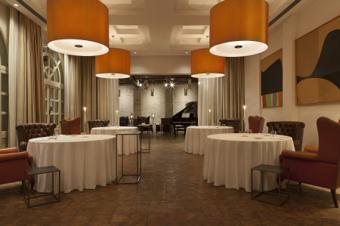
The formal restaurant inside Castello di Reschio — the Bolza family's 1,500-hectare estate on the Umbrian-Tuscan border, the most talked-about hotel opening in Umbria of the last five years. Fine dining built right into the 11th-century castle's west rampart walls with a sunset terrace over the valley, kitchen built on the estate's own gardens, oil, and wine, modern Italian without showing off. Non-guests welcome with a reservation well in advance; the casual sibling Alle Scuderie is in the old stables if you want both.

Lisciano Niccone · 1,500-hectare estateReservation onlyNon-guests welcome
Visit website ↗
Vespasia restaurant at Palazzo Seneca, Norcia — Michelin-starred dining room

Courtesy of Palazzo Seneca

Vespasia

€€€€
Must orderNursino Ramen + a Sagrantino pairing

One Michelin star plus a Michelin Green Star inside the 16th-century Palazzo Seneca in Norcia (the Umbrian truffle and salumi town, half-rebuilt after the 2016 earthquake) — the Bianconi family on their fifth generation, where head chef Fabio Cappiello and co-chef Fumiko Sakai — Cappiello a veteran of the Bianconi kitchens for over fifteen years — pull from the local traditions of the Sibillini mountains and the historic Norcia black-pork heritage. The signature Nursino Ramen (mushroom and ham consommé) is why Michelin inspectors keep coming back. Five tasting menus including a vegetarian; dinner only, closed Wed; book by 8 p.m. the night before.

Norcia · Via Cesare Battisti 101 Michelin + Green StarDinner only
Visit website ↗
Andreina, Loreto — swap for photo

Andreina

€€€€
Must orderpigeon cooked in the wood-fired oven

One Michelin star in Loreto (a small pilgrimage town twenty minutes from Senigallia) — chef Errico Recanati took over his grandmother's restaurant and turned it into one of Italy's most original kitchens, every dish touched by wood, embers, or smoke. The pigeon (aged, cooked over coals, finished in the wood oven) is the dish people return for; the tasting menu is the best way in. Short, serious wine list.

Loreto · Via Buffolareccia 141 Michelin starBook ahead
Visit website ↗
Locanda Solomeo — swap for photo

Nostrano

€€€€
Must orderbrodetto + a glass of Verdicchio

One Michelin star on the Pesaro seafront — chef Stefano Ciotti's clean modern room with windows onto the boats, Marche-rooted but unfussy. The brodetto (slow, concentrated Adriatic fish stew with grilled bread) is the dish he's known for; the tasting menus pull from the hills as much as the sea. Pair with Verdicchio dei Castelli di Jesi; less theatre than the Senigallia heavyweights and a little easier to book.

Pesaro · Piazzale della Libertà 71 Michelin starSeafront
Visit website ↗
Il Tiglio, Montemonaco — swap for photo

Il Tiglio

€€€€
Must ordertasting menu, the deer course

One Michelin star plus a Green Star in a 700-person village on the Sibillini mountains — Enrico Mazzaroni rebuilt the restaurant after the 2016 earthquake and grows or raises most of what's on the plate. The first Michelin star ever awarded in the province of Ascoli Piceno; the drive in is theatrical (switchbacks, oak forest, Monte Sibilla in the windshield). Lunch is the easier booking; the price-to-quality ratio is among the best in Italy at this level.

Montemonaco · Via Isola San Biagio 341 Michelin + Green StarRemote — drive in
Visit website ↗

Adriatic Fish · The Coast

Senigallia is the smallest city in Italy with five Michelin stars — and the two restaurants that hold them, Uliassi and Madonnina del Pescatore, are on the same stretch of coast, ten minutes apart. Both are pilgrimage dinners, both need months of notice. Below them, a tier of excellent, looser fish places that are easier to get into and almost as good.

Uliassi, Senigallia — swap for photo

Uliassi

€€€€€
Must ordersmoked spaghetti with clams + the full tasting

Three Michelin stars on Senigallia's molo di levante — looks like a beach restaurant from outside, has been quietly defining what Marche seafood can be for thirty-five years inside (Mauro and Catia Uliassi since 1990). The smoked spaghetti with clams and roasted date tomatoes is on every menu for a reason; the wild-duck "lab di mare" tasting flips between sea and game. Book several months ahead for summer; closed Monday and Tuesday.

Senigallia · Banchina di Levante 63 Michelin starsBook 2–3 months out
Visit website ↗
Madonnina del Pescatore, Senigallia — dining room with bamboo screen and cobalt-blue glasswarePhoto: Lorenzo Cicconi Massi · Courtesy of Madonnina del Pescatore

Madonnina del Pescatore

€€€€€
Must orderraw fish tasting + Verdicchio

Moreno Cedroni's two-Michelin-star Marzocca di Senigallia restaurant — the chef who introduced Italians to Adriatic crudo around 2000 and still pushes fermentation, smoking, and aging without losing the plot. Long sushi-style bar, small modern room ten minutes south of Uliassi along the same coast. Order the raw-fish tasting menu and let them drive; pair with Verdicchio dei Castelli di Jesi. Book early.

Marzocca di Senigallia · Lungomare Italia 112 Michelin starsBook ahead
Visit website ↗
Ristorante Emilia, Portonovo — swap for photo

Ristorante Emilia (Da Marisa)

€€€
Must ordermoscioli alla portonovese

A beachside trattoria in the Conero national park's Portonovo cove since 1929 (known to locals as Da Marisa) — Slow Food Foundation flagship for moscioli, the wild rope-grown Adriatic mussels native to this stretch of rocky coast. Order them alla portonovese (tomato, white wine, garlic, parsley, breadcrumbs) with a chilled Verdicchio, lunch with your feet near the water. Open spring through autumn.

Portonovo · Baia di PortonovoSlow Food AllianceSpring–autumn

Aperitivo · Sweet · The Late Hour

Aperitivo is the move at 7 p.m. — a glass of Sagrantino or a Meletti Spritz, a few olive ascolane, no rush. Sweets are an afterthought in Umbria and a serious matter in Perugia, where Baci Perugina was invented in 1922 and where the EuroChocolate fair takes over the centro storico every October.

Perugina House of Chocolate — swap for photo

Casa del Cioccolato Perugina

€€
Must orderfactory tour + Baci tasting

The Perugina factory and museum just outside Perugia (the Baci chocolate kiss was invented here in 1922) — book an English-language tour, walk the production line, watch Baci being wrapped, end at the museum café for the tasting. Touristy in the best sense — well-organised, fun, genuinely good chocolate. Skip in October during EuroChocolate, when the place is mobbed.

San Sisto, Perugia · Viale San Sisto 207Book in advanceSkip during EuroChocolate
Visit website ↗
Bar Sensi, Spoleto — swap for photo

Enoteca Provinciale di Spoleto

€€
Must orderSagrantino di Montefalco + pecorino board

The right Spoleto aperitivo — the region's official tasting room with maybe 50 Umbrian producers behind the bar and a team happy to walk you through. Sagrantino di Montefalco is the headline red; the white Trebbiano Spoletino is the real revelation, mineral and underrated. Order a tagliere of pecorino di fossa (cave-aged) and salame umbro to go with. Short walk from the Duomo; closed Mondays.

Spoleto · Piazza della Libertà 7Umbrian wine onlyClosed Mon
Visit website ↗
La Staffa, Staffolo — swap for photo

La Staffa

€€
Must orderSelva di Sotto Verdicchio · book the tasting

A small biodynamic Verdicchio producer in Staffolo, forty-five minutes inland from Ancona — if you only drink one Marche wine on this trip, drink Verdicchio dei Castelli di Jesi, and La Staffa is the producer to know. Bright, mineral, structured wines that pair as well with brodetto as with truffle pasta. Tastings are intimate, in a converted barn, often led by Riccardo Baldi himself — book ahead, small windows.

Staffolo · 45 min from AnconaNatural / low-interventionBook ahead
Visit website ↗
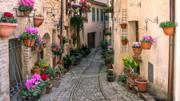
Hilltown lane in Le Marche
The Stay

Castelli, convents, and a farmhouse with a fireplace in every room.

Where We Sleep

The stay.

12 places to sleep, organised by price. The high end is mostly castelli and private estates — restored medieval properties with their own olive oil. The mid-range is converted monasteries, palazzi, and serious country boutiques. The bottom end is small, careful in-town stays in the centro storico of a hilltop city. Almost everything worth knowing is rural — drive 20 minutes from town for the best stays.

€€ Under €220/night · small B&Bs, town centres, easy
Spello · historic centre
Suite
Pool
Restaurant
Drag to see more

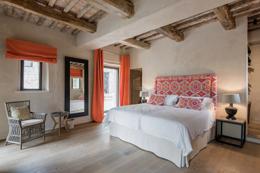
A small hotel-and-spa inside Spello's historic centre, near the medieval walls — on-site restaurant, a pool, and a handful of suites. Spello sits between Assisi and Foligno on the southern flank of Monte Subasio: a quieter, walled hill-town that doesn't churn through coach tours the way Assisi does. The right base for slowing Umbria down to its own pace.

What it's known for
Historic-centre Spello position, near the medieval walls
Hotel & Spa with a restaurant on site
Pool
Suite categories (incl. Suite Daniela)
AddressVia Salnitraia 15, Spello (PG)
Rate rangeBook direct for current rates
Best forCouples · quiet base in walled-town Umbria
NearAssisi · Foligno · Perugia — all within easy drives (est. via Google Maps)
Good to know
Inside the walled town — leave the car outside the gates (ZTL)
Spa is on site; book treatments at check-in
In-house restaurant — useful when you don't want to walk out for every meal
Insider Spello is small enough that two nights is the sweet spot — long enough to walk the walls and see the town's painted chapel without rushing, short enough that you'll still feel the pull of the next hill town. Eat the in-house restaurant at least once.
Book direct ↗
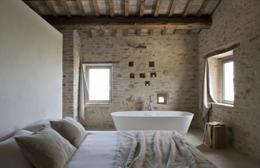
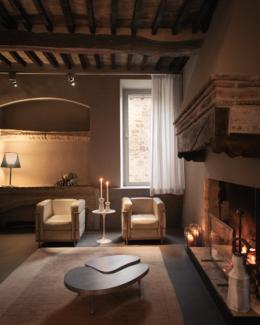
Casa Olivi — bedroom with original stone walls, wood-beamed ceiling, freestanding white bathtubCourtesy of Casa OliviBedroom · stone walls + freestanding tub
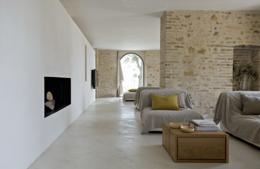
Casa Olivi — modernist living room with exposed brick wall, polished concrete floor, low linen sofasCourtesy of Casa OliviLiving room · the modernist intervention
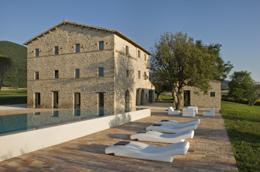
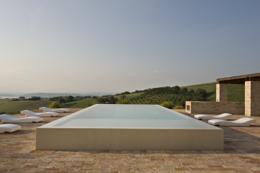
Casa Olivi — infinity pool terrace looking out across the Marche hillsCourtesy of Casa OliviPool · the Marche hills beyond
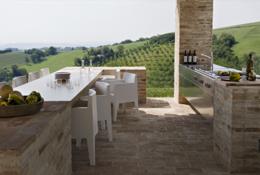
Casa Olivi — outdoor kitchen and dining table on the terrace, view to vineyardsCourtesy of Casa OliviOutdoor kitchen · long table over the vineyards
Drag to see more

Photos courtesy of Casa Olivi

A restored stone farmhouse on a hilltop outside Treia in central Marche, brought back from ruins by two Swiss architects — the design intervention is the case study. Original walls preserved, new openings cut with modernist precision, polished concrete floors, lime-washed interiors, no period-room theatre. This is a private villa, not a hotel — the entire property rents as one to a single party, by the week. Five bedrooms, five bathrooms, sleeps eleven. Pool, olive grove (the house presses its own oil), outdoor kitchen, with the Sibillini foothills behind and the Adriatic coast within an hour by car.

What it's known for
Whole-villa private rental — single party, weekly
5 bedrooms · 5 bathrooms · sleeps 11
Modernist restoration of an old stone farmhouse
Pool · olive grove · the house produces its own oil
FormatWhole-villa private rental · weekly minimum
Rate rangeFrom €13,000/week in June · enquire direct for other seasons
Best forMulti-generational families · friend groups · architecture travelers
NearTreia · Macerata 23 km · Ancona Airport 55 km · beach 42 km · nearest shops 8 km
Good to know
Single-party rental — the whole house, not by the room
Chef's-table dinners, wine tastings and hot-air-balloon flights can be arranged on site
Nearest shops about 8 km — plan a stock-up on arrival
Insider Treat the location as the point: Macerata twenty-something minutes south for opera and a city dinner, the Adriatic coast under an hour for the sea, the Sibillini foothills behind you for the long drive. Build the week around a chef's-table dinner at the house — that's where the property does its best work.
Book direct ↗
€€€ €220–€450/night · converted convents, design-led palazzi
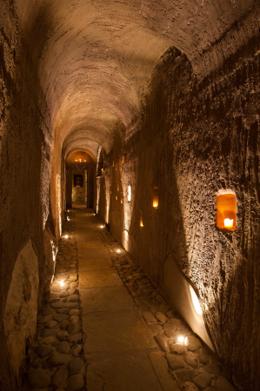
Eremito — candlelit stone corridor, candles in wall nichesDesign HotelsCorridor · candles in stone
Eremito — a celluzza monk-cell room with whitewashed walls and a forest-view windowDesign HotelsCelluzza · the 9-sqm monk-cell room
Eremito — sala with exposed wood beams and a panoramic window opening to the forested valleyDesign HotelsSala · the valley below
Eremito — exterior at golden hour, stone monastery with bell towerDesign HotelsGolden hour · bell tower + meadow
Drag to see more

Photos courtesy of Eremito · Design Hotels

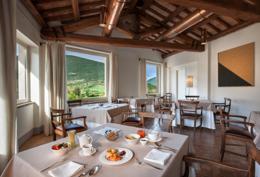
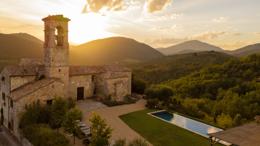
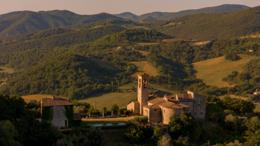
Not for everyone — and exactly right for some people. Eremito ("little hotel of the soul") is Marcello Murzilli's project: a historic stone structure on the edge of a vast forest preserve, faithfully restored in the spirit of a 14th-century monastery. The rooms — called Celluzze, after a hermit's cell — are deliberately minimal: 9 square metres, a 120-cm bed, private bathroom, underfloor heating. Described as the world's first hotel with only solo rooms. Cuisine is vegetarian and seasonal, grown locally; dinner is shared in silence, accompanied by Gregorian chant. Digital connection is limited by design. The setting is the Monte Peglia UNESCO Biosphere Reserve, well away from populated centres and busy roads.

What it's known for
14th-century-style monastery restoration · "Franciscan minimalism"
Solo-only rooms (Celluzze, 9 sqm) — the world's first solo-only hotel
Silent vegetarian dinner, Gregorian chant
Inside the Monte Peglia UNESCO Biosphere Reserve
AddressLocalità Tarina 2, 05010 Parrano (TR)
Rate rangeSingle all-inclusive rate — enquire direct
Best forSolo travel · digital detox · reset
NearOrvieto ~45 min by car (est. via Google Maps)
Good to know
All-inclusive — meals, activities and rate bundled together
Digital connection is limited — plan accordingly
Vegetarian-only menu; dinner taken in silence
Insider Come for the reset, not the rooms — at 9 sqm a Celluzza is meant to be slept in, not lived in. The day is the property: the silence, the woods, the candlelit refectory. Bring something to read.
Book direct ↗
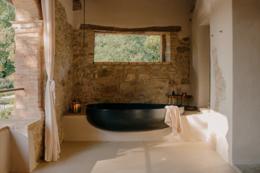
Vocabolo Moscatelli — cantilevered black freestanding bathtub on a stone loggia opening to the forestDesign HotelsBathtub on the loggia · the signature shot
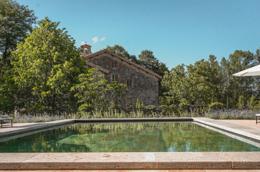
Vocabolo Moscatelli — outdoor pool with the stone monastery facade behind, lavender bedsDesign HotelsOutdoor pool · monastery beyond
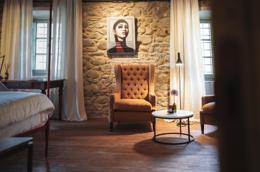
Vocabolo Moscatelli — suite with rough stone walls, ochre velvet wingback, antique writing desk, modernist portraitDesign HotelsSuite · stone + custom furnishings
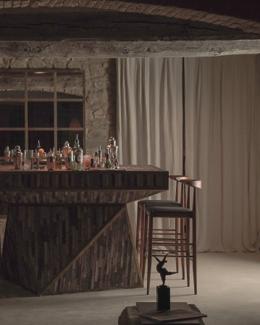
Vocabolo Moscatelli — the Matite cocktail bar, sculptural wood-faced counter under a brick vaultDesign HotelsMatite Bar · under the brick vault
Drag to see more

Photos courtesy of Vocabolo Moscatelli · Design Hotels

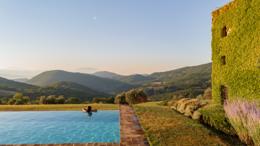
Frederik Kubierschky and Catharina Lütjens — both alumni of top Swiss hotels (Widder, Park Hyatt Zurich) — have made over an abandoned 12th-century monastery near Umbertide into one of the most thoughtful recent openings in Umbria. Twelve rooms in total, eight in the original monastery and four in a separate annex with private gardens. The restoration is by architect Jacopo Venerosi Pesciolini (Archiloop), with handmade Cotto Etrusco tiles, custom forged ironwork, and furnishings by Samarreda and Tosconova. The restaurant runs out of the candlelit cloisters with a creative Umbrian menu drawn from the kitchen gardens; the Matite Bar leans on cocktails and local wines. Outside: an outdoor pool, a 30-metre pergola, and a grove of native Umbrian fruit trees planted with the Arboreal Archaeology Foundation. One Michelin Key (2024).

What it's known for
12th-century monastery, restored by Archiloop / Jacopo Venerosi Pesciolini
One Michelin Key (2024) · Design Hotels member
Restaurant in the candlelit cloisters · Matite Bar
Outdoor pool · 30-m pergola · heritage Umbrian fruit grove
AddressVia del Refari 2, Calzolaro, 06019 Umbertide (PG)
Rate rangeEnquire direct — seasonal
Best forDesign-conscious couples · slow Umbria stays · dog owners
NearUmbertide town · Perugia ~45 min by car (est. via Google Maps)
Good to know
Seasonal — closed January and February
Dog-friendly (with Poldo Dog Couture accessories)
Annex rooms have private gardens — worth asking for at booking
Insider If you can, ask for one of the four annex rooms with the private garden — the trade-off is being a short walk from the main monastery, but the privacy and the outdoor space win. Time a visit to coincide with the restaurant; that's where the property is at its best.
Book direct ↗
Castle exterior · 13th-century walls
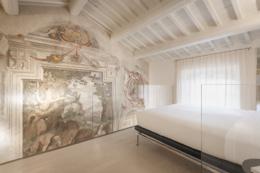
Frescoed room
Outdoor pool · valley view
Ristorante Gradale
Drag to see more

A 13th-century castle just outside Perugia's centro storico, on the "via regalis" — the old royal road to Assisi — restored as an 18-room boutique hotel. Old stone walls and well-worn frescoes, contemporary comfort layered in: an outdoor panoramic pool (unheated), sauna, steam room, and hydromassage tubs. The in-house Ristorante Gradale runs a modern Umbrian menu in a dining room or on a covered terrace overlooking the countryside. Works as both a city base for Perugia and a countryside escape.

What it's known for
13th-century castle on the "via regalis" to Assisi
One Michelin Key
Outdoor pool · sauna · steam room · hydromassage
Ristorante Gradale · modern Umbrian menu
AddressStrada Montevile 3, 06126 Perugia (PG)
Rate rangeEnquire direct — seasonal
Best forCouples · honeymoons · castle-stay romantics
Near~3 km from Perugia historic centre · ~6–7 km from Fontivegge station
Good to know
Operated by TH Resorts
Outdoor pool is unheated — best in warm-season months
Each of the 18 rooms is individually named for castle/local-history references
Insider Use the property as both castle stay and Perugia base — the centro storico is a short drive (or escalator ride from below). The terrace at Gradale is the seat to ask for in warm-weather months.
Book direct ↗
Corso Vannucci facade
Guest room
Lobby
Breakfast room
Drag to see more

A small boutique hotel on Corso Vannucci — the broad pedestrian street that runs the spine of Perugia's historic centre — now operating under the Etruria Collection brand. The address can't be improved on for a city stay: walk five minutes in any direction and you're in front of the Cathedral, the Galleria Nazionale dell'Umbria, or a bar your friends will be jealous of. No pool, no spa, no countryside view — but the right in-town move.

What it's known for
Address directly on Corso Vannucci
Operates under the Etruria Collection
Walking distance to the Cathedral & Galleria Nazionale
In-town stay — no country amenities
AddressCorso Vannucci 97, 06121 Perugia
Rate rangeEnquire direct — seasonal
Best forCity stays · first/last night of trip · gallery and centro storico days
NearCathedral · Galleria Nazionale dell'Umbria · Collegio del Cambio — all short walks
Good to know
Corso Vannucci is pedestrian — leave the car at the city's perimeter ZTL lots
No pool, no spa — pair with a countryside stay if you want both
Street-facing rooms catch evening noise from the corso — ask for a courtyard side
Insider Use it as your first or last night — base in town, then move to the country for the rest of the trip. The address is the single best in-town hotel position in Perugia.
Book direct ↗
€€€€ €450–€850/night · serious country house, 5-star
Monastery exterior · Santa Caterina
Suite · from a 13th-century cell
Spa · among Roman pilasters
Ristorante Benedikto
Drag to see more

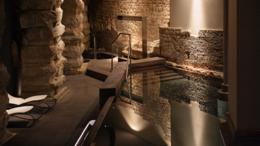
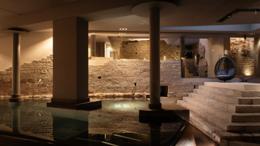
Founded in 1275 as the Santa Caterina monastery and converted into a hotel in the historic centre of Assisi — 18 suites, all different, carved from the original 13th-century monastic cells. The headline is the underground Roman spa: a sequence of Tepidario, Caldario, Sudatorio and Frigidario rooms threaded between the pilasters of a 1st-century AD Roman amphitheatre. Ristorante Benedikto handles dining, with wide windows facing the Rocca Maggiore and Rocca Minore fortifications above the town. The Day Spa is open to non-guests too.

What it's known for
Founded 1275 — the Santa Caterina monastery
Underground Spa Museum among 1st-century AD Roman amphitheatre pilasters
18 suites carved from the original 13th-century monastic cells
Ristorante Benedikto · view to Rocca Maggiore and Minore
AddressVia Eremo delle Carceri 1A (Piazza Giacomo Matteotti), Assisi
Rate rangeEnquire direct — seasonal
Best forCouples · spa stays · design lovers
NearCentro storico of Assisi · parking close to the entrance
Good to know
Day Spa open to non-guests — book the circuit when you check in
Restaurant Benedikto looks straight up at the Rocca — request a window seat
Parking is steps from the entrance — useful in the centro storico ZTL
Insider The Day Spa being open to outside guests means the warm-water sequence fills up in the late afternoon — claim the morning slot on arrival day and you'll have the Roman pilasters mostly to yourself.
Book direct ↗
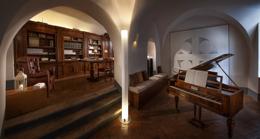
Palazzo Seneca — vaulted hall with grand piano, library nook and column lightCourtesy of Palazzo SenecaHall · the piano under the vault
Palazzo Seneca — Junior Suite with four-poster wood-panelled bed and antique writing deskCourtesy of Palazzo SenecaJunior Suite · four-poster bed
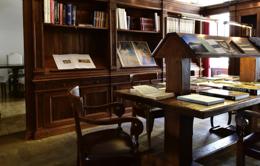
Palazzo Seneca — dark wood library with the Bianconi book collection on displayCourtesy of Palazzo SenecaBiblioteca · the Bianconi collection
Palazzo Seneca — breakfast room with Sibillini mountain views through the windowsCourtesy of Palazzo SenecaBreakfast · Sibillini through the windows
Drag to see more

Photos courtesy of Palazzo Seneca

Palazzo Seneca is the right base for the southern, mountainous half of Umbria — Norcia, the Sibillini national park, the wildflower plateau of Castelluccio. Built in the 16th century by the Seneca family (whose antique writing desk still sits in the 50-square-metre Suite) and now operated by the Bianconis, whose family has run hotels in Norcia for more than 150 years. 24 rooms in total, all different, with original architecture and a mix of contemporary and antique furnishings. Vespasia, the on-site restaurant under head chef Fabio Cappiello (fifteen-plus years with the Bianconis), holds one Michelin star and a Green Star for sustainability (2025), built around Norcian black truffles, pecorino and other local ingredients. Spa with Turkish baths, sauna and hydro-massage; library, courtyard garden. A Relais & Châteaux member.

What it's known for
16th-century palazzo · Bianconi family stewardship (150+ years in Norcia hospitality)
Vespasia restaurant · ★ Michelin + Green Star (2025)
Relais & Châteaux member · 24 rooms incl. one Suite
Spa with Turkish baths, sauna, hydro-massage
AddressVia Cesare Battisti 12, 06046 Norcia (PG)
Rate rangeEnquire direct — seasonal
Best forFoodies · Sibillini hikers · truffle season
NearPiazza San Benedetto · Norcia salumerie · Sibillini National Park · Castelluccio plateau
Good to know
Vespasia: dinner 7.30–10.30 p.m., closed Wednesdays
Black Norcian truffle is the local star — order accordingly when in season
Time a stay around the Castelluccio bloom (late June–early July) for the wildflower drive
Insider Use one day for the Castelluccio drive — the wildflower plateau in early summer is the trip's photograph. Eat at Vespasia at least one night to taste what the Bianconis have built; book the chef's tasting if you can.
Book direct ↗
Piazza Italia facade
Valley-view suite
Pool · transparent floor over Etruscan ruins
Collins' Bar
Drag to see more

The grand-hotel option in Perugia — Sina Brufani opened in 1884 as the city's first luxury 5-star hotel, and still occupies its original address at Piazza Italia 12 in the heart of the historic centre. 94 rooms and suites, classical décor, sweeping views over the Umbrian valleys from the south-facing windows. Collins' Restaurant runs out of the main hotel; Collins' Bar overlooks Piazza Italia and took the "Best Innovative Bar in Central Italy" award at Mix In Dreams. The Sina Wellness Club is the curiosity: a heated indoor swimming pool with a transparent foundation set under the Etruscan vaults, so you can see the ancient walls and archaeological remains while you swim — plus sauna, Turkish bath, and relaxation area. The easiest in-town option in Perugia when you want space, service and a real address.

What it's known for
Perugia's first 5-star hotel · opened 1884
Pool over Etruscan ruins — transparent floor reveals the ancient walls
Collins' Restaurant & Collins' Bar (Best Innovative Bar, Central Italy · Mix In Dreams)
94 rooms & suites · valley views
AddressPiazza Italia 12, 06121 Perugia
Rate rangeFrom €129/night (own site)
Best forCity stays · families · classic-luxury preference
NearCathedral · Fontana Maggiore · Galleria Nazionale · Corso Vannucci — all walking distance
Good to know
South-facing rooms catch the valley view — ask for a higher floor
Wellness pool has a transparent floor over Etruscan archaeology — open daily 07:00–22:00
Collins' Bar is a city-wide aperitivo destination — open to non-guests
Insider Collins' Bar is the move whether or not you're staying — go for an aperitivo and pair it with a sunset walk along the Rocca Paolina escalator route into the city centre.
Book direct ↗
€€€€€ €850+/night · the headline, the castle, the splurge
Castle exterior · 11th-century walls
Tower suite · five floors of the ancient tower
Bathhouse · in the wine cellars
Ristorante alle Scuderie · old stables
Drag to see more

An 11th-century fortified castle on a 1,500-hectare private estate near the Umbria–Tuscany border, bought by Count Antonio Bolza and his son Count Benedikt Bolza in the 1990s and restored over the following three decades. The hotel opened in 2021 with 36 rooms and suites (25 of them suites), designed by Benedikt himself — Architectural Digest has named him among the 100 best architects working today. The most extravagant accommodation spans five floors of the castle's ancient tower; some grander suites occupy the former church vestry next door. Two restaurants: Ristorante al Castello (in the castle's western ramparts, fig-tree terrace) and Ristorante alle Scuderie (in the converted stables, with the stylish Bar Centrale alongside). The Bathhouse, set inside the original wine cellars, runs a Roman bath, hammam, Swedish sauna and naturally-lit plunge pool. Outside: a dramatic oval-shaped outdoor pool, an equestrian centre with pure-bred Andalusian horses, olive groves, vineyards, lakes, a cooking school, an enoteca, and over 50 restored farmhouses scattered across the estate.

What it's known for
Three Michelin Keys — the guide's top hotel honor
11th-century castle · 1,500-hectare Bolza family estate
Two restaurants (Al Castello · Alle Scuderie) + Bar Centrale + Il Torrino pool bar
Roman Bathhouse in the wine cellars · Andalusian-horse stables · oval outdoor pool
AddressLisciano Niccone, 06060 Perugia
Rate rangeEnquire direct — seasonal · M&MS lists from ~£1,516/night
Best forHoneymoons · milestone trips · slow weeks · architecture travelers
NearEstate is the destination · Umbria–Tuscany border, ~1 hr from Cortona and Perugia
Good to know
Seasonal — closed mid-November to mid-March
Over-12s only · no dogs
Beehives on site (added 2016) · organic food from estate production
Insider If the budget allows, the five-floor tower suite is the property's headline accommodation — it's also the slowest to reach (lots of stairs). For lower-floor grandeur, the former-vestry suites in the neighbouring building hold their own. Book the cooking school or a ride from the stables for one full day.
Book direct ↗
Estate landscape · woodland + olive groves
Villa · private infinity pool
Il Caldaro restaurant · garden seating
14th-century parish church
Drag to see more

If Reschio is the castle option, Murlo is the private-villa one. An 18,000-acre estate stewarded by the Carabba Tettamanti Radziwill family across generations; the recent restoration is the work of Alessio and Carlotta Carabba Tettamanti, who turned the historic structures — farmhouses, a water mill, and a 14th-century parish church — into a curated set of freestanding villas. Nine villas in total, sized from Molinella (2 guests) up to Castiglione Ugolino (20 guests), most with private infinity pools and outdoor Jacuzzis. Three Deluxe rooms in the main complex round out the inventory. Il Caldaro, the on-site restaurant, has garden seating and indoor dining rooms. On-property: cooking classes, wine tastings, truffle hunts, honey tastings. The opposite of a hotel.

What it's known for
Family-owned 18,000-acre private estate
9 freestanding villas (2–20 guests) · private pools & Jacuzzis
Il Caldaro restaurant on the estate
Cooking classes · wine tastings · truffle hunts · honey tastings
AddressOutside Perugia · estate-only access · enquire direct
Rate rangeEnquire direct — per-villa pricing, seasonal
Best forFamilies · groups · multi-generation trips · full privacy
Near~20 min from Perugia by car (per Michelin Guide listing)
Good to know
Villas sleep 2–20 — pick the right size before you book
Estate is the destination — a car is essential for anything off the property
On-site experiences (cooking classes, truffle hunts, wine tastings) can be arranged in advance
Insider Match the villa to the trip: Molinella for a couple, Penna or San Savino for a small group, Castiglione Ugolino if you're filling it with twenty. Build one full day around an on-estate activity — the truffle hunt and the honey tastings are the ones to ask about first.
Book direct ↗
What We Do

The moves.

Three categories, twenty things. Frescoes and ducal palaces in the morning, vineyards or olive presses in the afternoon, a long walk or a slow drive in between. Most of these need a car. None of them need a reservation more than a week out.

01Book ahead

Basilica di San Francesco

Assisi

The Giotto frescoes are the reason people come to Umbria. Two churches stacked on top of each other; the upper one has the famous St Francis cycle. Go first thing in the morning before the tour groups arrive. Free; modest dress required (cover shoulders and knees).

Free entry8 a.m. openingDress code
Book direct ↗
02Timed entry

Palazzo Ducale + Galleria Nazionale

Urbino

Federico da Montefeltro's 1460s ducal palace — the Renaissance ideal turned into architecture. The gallery inside holds Piero della Francesca's Flagellation and Raphael's portrait of a young woman. Allow two hours minimum. The studiolo (the duke's tiny study, inlaid with trompe-l'œil intarsia) is the unmissable room.

€8Closed MonPiero della Francesca
Book direct ↗
03Free

Duomo di Orvieto

Orvieto

The façade is one of the great Gothic frontages in Italy — striped marble, mosaics, sculpted bronze doors. Inside, Luca Signorelli's Last Judgement frescoes in the San Brizio chapel pre-date the Sistine Chapel by a few years and Michelangelo definitely looked at them. Pay the small chapel ticket; the rest of the cathedral is free.

€5 chapelSignorelli frescoesOpen daily
Book direct ↗
04Free

Cappella Baglioni — Santa Maria Maggiore

Spello

The reason to come to Spello. Pinturicchio's 1501 fresco cycle in a side chapel of the parish church — saturated colour, Renaissance landscapes behind biblical scenes, the kind of detail you stand in front of for thirty minutes. Drop a euro into the light box. Worth a detour from anywhere in Umbria.

Free (€1 light box)Pinturicchio 1501Open daily
Book direct ↗
05Free

Ponte delle Torri

Spoleto

A 14th-century aqueduct-bridge spanning a wooded gorge, 230 metres across, 80 metres high. The view from the Rocca above is the postcard. Walking across it is closed periodically for restoration — check before you go. The forest walk along the gorge is open year-round and quietly stunning.

FreeSometimes closedWalking trail
06Book ahead

Orvieto Underground

Orvieto

A 75-minute guided tour through a fraction of the 1,200 Etruscan caves and wells that honeycomb the tuff rock beneath Orvieto. Wine cellars, olive presses, columbaria for pigeons (a Renaissance protein source). The English-language tours run twice a day in season — book online to skip the queue.

€775 minEnglish tours
Book direct ↗
07Timed entry

Galleria Nazionale dell'Umbria

Perugia · Corso Vannucci

The main Umbria art museum, inside the 13th-century Palazzo dei Priori on Perugia's main pedestrian street. Pinturicchio, Perugino, Gentile da Fabriano, Piero della Francesca's Polittico di Sant'Antonio. Allow two hours. Closed Mondays.

€10Closed Mon2 hrs
Book direct ↗
08Free

Solomeo — Brunello Cucinelli's village

Solomeo · 20 min from Perugia

A 14th-century village Cucinelli has spent 40 years restoring as a working "humanistic capitalism" project — Renaissance theatre, Forum of the Arts, philosophers' garden, and the flagship boutique inside a restored palazzo. Walkable in an hour. Free to visit; ask at the boutique about a tour of the theatre and library.

Free to walkBoutique high-endAsk for theatre tour
Book direct ↗
09Timed entry

Festival dei Due Mondi

Spoleto · late June – mid July

Italy's most international performing arts festival, running every summer since 1958. Opera in the Roman amphitheatre, theatre in cloistered courtyards, dance, contemporary music, visual arts. World-class programme in a hilltop Umbrian town. Tickets €25–€60 for most events; book by April when the programme drops.

€25–€60Late June–mid July onlyBook April
Book direct ↗
10Free

Piano Grande di Castelluccio

Sibillini Mountains

A high plateau at 1,300m in the Monti Sibillini national park. From late May through early July, the wildflower bloom — the fioritura — turns the plain into stripes of poppy red, cornflower blue, mustard yellow, and lentil green. The most photographed landscape in Umbria, and most travellers miss it. Drive up from Norcia.

Bloom: late May–early JulNational parkDrive from Norcia
11Free

Marmore Falls

Near Terni

A 165-metre Roman-engineered waterfall — the highest man-made falls in Europe, channelled by the consul Manius Curius Dentatus in 271 BC. The water is released on a published schedule (mornings and afternoons in season); check the website. Several walking trails from short to multi-hour.

€12Scheduled releaseSeveral trails
Book direct ↗
12Free

Drive: Spoleto → Norcia → Castelluccio

Eastern Umbria

The classic Umbria drive. Two hours each way, climbing from Spoleto into the Apennines. Stop in Norcia (the truffle and salumi town, rebuilt after the 2016 earthquake), then up to Castelluccio for the views. Eat lentils. Buy salami. Don't rush.

2 hr each wayTruffle countryAvoid in snow
13Free

Spiaggia di Portonovo

Parco del Conero, Marche

A pebbled cove under the Monte Conero cliff, 20 minutes south of Ancona. The water is the clearest on the Adriatic — chalk-cliff turquoise, almost Mediterranean blue. Park up top, walk down. Bring water. Eat lunch at one of the beach trattorias. Closed in winter; perfect in June and September.
Free (paid parking)May–OctNational park
14Book ahead

Grotte di Frasassi

Genga, Marche

A vast cave system in central Le Marche — one of the largest in Europe. The standard tour is 75 minutes through the Grotta Grande del Vento; the "Avventura" tours go further, with helmets and ropes, and need booking weeks out. Cold inside (14°C year-round); bring a jacket.

€18 standardCold insideOpen year-round
Book direct ↗
15Book ahead

Truffle hunt — Acqualagna
Acqualagna, Marche

Acqualagna produces two-thirds of Italy's truffles. A morning hunt with a local trifulau and his dog is 2–3 hours through the oak forest, ending with a tasting of what you find — or, more honestly, what they've planted. Several outfits in town run them; book through Acqualagna's tourism office. White truffle season is October–December; black truffles year-round.

€90–150/personWhite: Oct–Dec2–3 hours
Book direct ↗
16Book ahead

Sagrantino tasting — Arnaldo Caprai

Montefalco

The cantina that put Sagrantino on the international map. Marco Caprai's 25-Anni cuvée is the benchmark. Tours and tastings need booking in advance — the standard one is 90 minutes and runs through five wines including the structured Sagrantinos. Pair the tasting with lunch on the terrace if it's offered.

€25–6090 minBring water
Book direct ↗
17Free

Mercato Coperto, Perugia

Perugia, centro storico

Perugia's daily covered market — small, central, easy to walk through in half an hour. Cheese, salumi, fresh pasta, the kind of pecorino aged in walnut leaves you don't find at home. Mornings only; closed Sundays. Buy a picnic; eat it on the steps of the Duomo.

Free entryMornings onlyClosed Sun
18Book ahead

Norcia salumi tour

Norcia, Umbria

Norcia is the town that gave Italy the word for a butcher (norcino). Several salumerie offer guided tastings — Norcineria Ansuini and Brancaleone da Norcia are the names — walking you through prosciutto di Norcia IGP, capocollo, ciauscolo, the local pecorino. Combine with a truffle stop next door. Norcia was hit hard by the 2016 earthquake and is still rebuilding; supporting local producers matters.

€20–401 hrBuy to take home
19Free

Eurochocolate / Truffle Fair

Perugia / Acqualagna

Two seasonal anchors. EuroChocolate runs the second half of October in Perugia — the centro storico is taken over by chocolate makers from Italy and beyond. The Acqualagna National Truffle Fair runs three consecutive weekends from late October through early November in the Marche. If you're here in autumn, structure the trip around one or the other.

Mid-Oct–early NovFree entryCrowds
Book direct ↗
20Book ahead

Fabriano Paper Museum

Fabriano, Marche

Fabriano has been making fine paper since the 13th century — much of the paper used by Michelangelo, Raphael, and the Vatican came from this town. The Museo della Carta runs working presses and a small atelier where you can try the cotton-rag technique yourself. Email ahead to reserve the workshop; the standard entry is walk-in.

€7 entry€15–25 workshopEmail ahead
Book direct ↗
The Wines

You don't need to know wine.

You need to know what to order with what's on the table. Pick a kind of meal, get the wine. Umbria and Le Marche aren't Tuscany — they make some of the most interesting wines in central Italy, and almost nobody outside the regions drinks them.

If you're eating… Lamb, wild boar, bistecca Anything cooked over wood or slow-braised. The Castelluccio lentil dishes. Aged pecorino di Norcia.
Order Sagrantino di Montefalco Montefalco · Umbria · 33 months aging 100% Sagrantino — only grown here €35–90 · the tannic, age-worthy Umbrian red
If you're eating… Truffle pasta, egg dishes Strangozzi al tartufo nero. Tagliolini al tartufo bianco. Anything butter-and-cheese forward. Mushroom risotto.
Order Trebbiano Spoletino Spoleto hills · Umbria · the underrated one Trebbiano Spoletino — local clone, mineral €18–35 · structured, dry, weighty enough for truffle
If you're eating… Adriatic seafood Brodetto in Senigallia or Pesaro. Scampi crudi. Frittura. Wild moscioli mussels in Portonovo. Anything from Uliassi or Madonnina del Pescatore.
Order Verdicchio dei Castelli di Jesi Jesi · Le Marche · the Adriatic white 100% Verdicchio — mineral, salt, citrus €15–40 · the only white that handles brodetto
If you're eating… Salumi board, olives, pecorino Standing at an enoteca counter. Olive ascolane at the bar in Ascoli. Tagliere of Norcia salumi before dinner.
Order by the glass Grechetto or Pecorino Umbria (Grechetto) · Marche / Abruzzo (Pecorino) Two underrated whites — bright, dry, food-friendly €4–7 / glass · the local-bar default

Four wines, two regions. Sagrantino is the headline — one of the most tannic native reds in the world, and only grown around Montefalco. Verdicchio is the other anchor — the white that earns Le Marche its fish reputation. The other two are the ones locals actually drink at lunch.

Truffles

Two truffles. Two seasons.

Umbria and Le Marche are two of the principal truffle regions in Italy — both produce both kinds, and unlike Piedmont (white only) or Tuscany (mostly white), here you can hunt and eat truffle year-round. Know which one's in season the week you visit, and where to find it.

Black · Tartufo Nero

The Norcia headline.

Shaved, sauced, sometimes warmed. The pillar of central Italian cooking. Available almost every month of the year.

When it's in season

JFM AMJ JAS OND
Where it grows

The hills around Norcia produce more black truffle than anywhere else in Italy — Tuber melanosporum, the prized winter black. The summer scorzone grows across most of Umbria and Marche; the uncinato peaks October through December. Acqualagna in Le Marche is the other major hub, with its national truffle fair in late October.

What to order

Strangozzi al tartufo nero — hand-cut Umbrian pasta with shaved black truffle, butter, parmigiano. Scrambled eggs with black truffle (the Norcia breakfast). Pici al tartufo. Black truffle holds up to heat, so it goes into sauces, not just shaved at the table.

What to pay

A plate runs €22–45 at a trattoria. A truffle hunt with a local cercatore plus lunch runs €100–180/person. The black truffle is the everyday luxury — you can order it without flinching.

Where to eat it

In Norcia: anywhere. Vespasia at Palazzo Seneca is the gourmet expression. Trattoria del Francese is the casual one. In Spoleto: Apollinare. In Assisi: Trattoria Pallotta. For a hunt: book through Palazzo Seneca or directly with the cercatori around Acqualagna.

InsiderThe Norcia truffle festival runs the last two weekends of February — book accommodation 4+ months ahead, and stay at Palazzo Seneca if you can. The town is at its best.
White · Tartufo Bianco

The Acqualagna pilgrimage.

Shaved over pasta at the table. Never cooked. Worth the price exactly once per trip — if your trip falls in the right months.

When it's in season

JFM AMJ JAS OND
Where it grows

The hills around Acqualagna in Le Marche are one of three principal white truffle zones in Italy (the others: Alba in Piedmont, San Miniato in Tuscany). Acqualagna whites are slightly more pungent than Alba's and a fraction of the price. The town's National Truffle Fair runs three consecutive weekends from late October.

What to order

Tagliolini al tartufo bianco — egg pasta, butter, parmigiano, freshly shaved truffle at the table. The truffle should be weighed in front of you. Anything fried, sauced, or pre-shaved is not the real thing. White truffle is never cooked.

What to pay

A plate at a serious restaurant runs €70–140 in season. Yes, that's the truffle, not the pasta. The price tracks the season — early October is highest, mid-November the value window once supply ramps up.

Where to eat it

In Acqualagna: any restaurant on the main square during the fair. At Il Tiglio (Montemonaco) when in season. At Uliassi and Madonnina del Pescatore on the coast — they fly it in fresh. At Palazzo Seneca in Norcia, which sources from local Umbrian hunters as well as Acqualagna.

InsiderMost "truffle oil" sold in shops is synthetic — chemically flavoured, no real truffle inside. The real thing exists but is rare and expensive. If the price seems too good, it is. Buy fresh truffle from a cercatore instead.
3-Day Plan

Umbria & Le Marche, in three days.

A loop from Perugia through eastern Umbria and into Le Marche. You'll want a car. You'll want to drive slowly. Three nights — Spello, the countryside, then Urbino — and you'll have done the spine of both regions without rushing.

8:00a.m.
MorningEat

Coffee at Bar San Francesco

Assisi · Piazza San Francesco

Before the Basilica opens, before the tour buses. Cappuccino and a cornetto at the bar. The piazza is yours for thirty minutes.

8:30a.m.
MorningSee

Basilica di San Francesco

Assisi

Upper church first, then lower. Giotto in the upper, Cimabue and Lorenzetti in the lower. Allow ninety minutes. Modest dress.

FreeDress code
1:00p.m.
LunchEat

Trattoria Pallotta

Assisi · Via Volta Pinta 3

Stringozzi al tartufo and pigeon with sage, in a stone-vaulted room run by the same family for a hundred years. Book ahead.

Book ahead
3:00p.m.
AfternoonDrive

Drive to Spello

20 min south through the valley

Drop your bag at La Bastiglia. Park outside the walls; walk in.

4:30p.m.
AfternoonSee

Cappella Baglioni — Pinturicchio

Santa Maria Maggiore, Spello

Drop a euro in the light box. Stand there for as long as you need. Don't skip the floor — the original 16th-century majolica is intact.

7:30p.m.
EveningDrink

Aperitivo on the rooftop

La Bastiglia terrace

Glass of Trebbiano Spoletino. The valley turns gold. Dinner at the hotel restaurant or walk five minutes to a trattoria — both fine.

9:30a.m.
MorningDrive

Spello → Montefalco

40 min through olive country

The hills are silver-green with olive groves. Stop anywhere with a sign that says frantoio — most places will let you taste.

11:00a.m.
Late morningDrink

Arnaldo Caprai tasting

Montefalco

Five Sagrantinos, ninety minutes. Spit the early pours if you're driving (and you are). Buy a bottle for tonight.

Book ahead€25–60
1:30p.m.
LunchEat

Lunch on the balcony of Umbria

Montefalco belvedere

Any of the trattorie around Piazza del Comune — sit outside, order the strangozzi, drink the local red. The view does the rest.

4:00p.m.
AfternoonSee

Drive to Spoleto · Ponte delle Torri

35 min south

Park at the Rocca. Walk the gorge trail at sunset. The bridge from underneath is the better photograph.

7:00p.m.
EveningDrink

Enoteca Provinciale

Spoleto · Piazza della Libertà

Pecorino board, glass of Trebbiano Spoletino, a Sagrantino to follow. Drive back to Spello after; it's twenty minutes.

8:00a.m.
EarlyDrive

Spello → Urbino

2 hr 30 across the Apennines

The drive is the point. The road climbs over the mountains, then drops into Le Marche. Stop for coffee in Gubbio if you've got time.

11:30a.m.
Late morningSee

Palazzo Ducale · Galleria Nazionale

Urbino

Two hours minimum. Find the Piero della Francesca Flagellation, then the Raphael portrait, then the studiolo. Then everything else.

€8Closed Mon
2:00p.m.
LunchEat

Antica Osteria Stella

Urbino · centro storico

Vincisgrassi, Verdicchio, crescia. Order all three. Walk it off afterwards through the medieval streets up to the Albornoz fortress for the view.

5:00p.m.
AfternoonDrive

Drive south to Casa Olivi

1 hr through the Marche hills · Treia

Skip the autostrada and take the inland road through the hills — slower, prettier. Check in at Casa Olivi: a restored stone farmhouse by Wespi de Meuron Romeo, the architecture pick of the trip.

8:00p.m.
EveningDrink

Sundown at Casa Olivi · dinner in Macerata

The terrace · then 20 min south

Aperitivo on the pool terrace as the sun goes behind the Sibillini. Dinner at Signore te ne ringrazi in Macerata — an intimate dining room, foraged Marche cooking, the Michelin-listed kitchen worth the planned drive. Save Ascoli Piceno + Caffè Meletti for the next morning's day-trip; it's an hour south and earns a long, slow afternoon, not a tacked-on dinner.

Only in Umbria & Le Marche

Eat like a local.

The dishes that define both regions. Order these. In this order.

Worth knowing

A few things.

The stuff that separates a good trip from a great one. None of this is in the brochure.

On renting a car

Non-negotiable. Trains connect Perugia and Orvieto to Rome, and there's a slow line through Spoleto and Foligno, but everything else is rural. The roads are good. Park outside the walls of any hilltop town — they're all ZTL (limited-traffic zones) and the tickets are real. Pick up in Rome or Florence; drop off at the same airport.

On August

Avoid 10–20 August if you can. Ferragosto (15 August) is the Italian summer holiday and half of the country's family-run restaurants and small hotels close for a week around it. Cities empty out, coast packs in. Late August is fine; first half is wreckage unless you've planned for it.

On Italian lunch hours

Kitchens open 12:30–2:30 and 7:30–10. Outside those windows you get bar food or nothing. Trattorias take the afternoon off, hard. Don't show up at 4 p.m. expecting pasta; you'll be the tourist who shows up at 4 p.m. expecting pasta.

On the truffle markets

If you're in Acqualagna or Norcia in autumn, you'll see white truffles on every menu and at every shop. The good ones are expensive (€2,000–€4,000/kg for white, €600–€900 for black). Restaurants price truffle shavings per gram. Two grams over pasta is plenty.

On Sagrantino

Sagrantino di Montefalco is a tannic, age-worthy red — among the most tannic varietals in the world. Drink it with red meat, ragù, aged cheese — anything that needs structure. The straight Sagrantinos can need 8–10 years to soften. Sagrantino Passito (a sweet version made from dried grapes) is a separate world entirely and a great dessert wine.

On the 2016 earthquake

The 2016 quakes hit Norcia, Amatrice, and the Sibillini hard. Norcia's basilica is still under restoration; some hill villages are partially closed. The town is rebuilding well and tourism matters here. Eat at the salumerie. Buy from the producers. Don't skip it because it's "still recovering" — that's the point.

On Le Marche's name

"Le Marche" — Lé Mar-kay — is plural. The name comes from the medieval marca, or borderland; the region was a collection of border counties under the Holy Roman Empire, hence the plural. Don't call it "the Marches" (the Anglicised version is dated) and don't try to make it singular.

On church dress codes

The Basilica in Assisi and the duomo in Orvieto enforce dress codes — shoulders and knees covered, no exceptions. Bring a light scarf if you're in summer clothes. They sell paper ponchos at the door but they're €5 and ugly.

More Italy Other regions, in any order.
Upon Request

Want it built around you?

Tell us you're heading to Umbria & Le Marche. When, for how long, what you care about, how you travel. We'll send a custom itinerary in 72 hours — castelli, restaurants, drives, the right wineries, truffle hunts worth doing, the whole map, built around you specifically. Unlimited revisions until it's right.

$85, one time.

Commission an itinerary →

Delivered within 72 hours · Unlimited revisions included