Hotels close.
Most of the coast shuts November to March. Le Sirenuse, Il San Pietro, Santa Caterina: all dark. If a place is open in February, ask why.
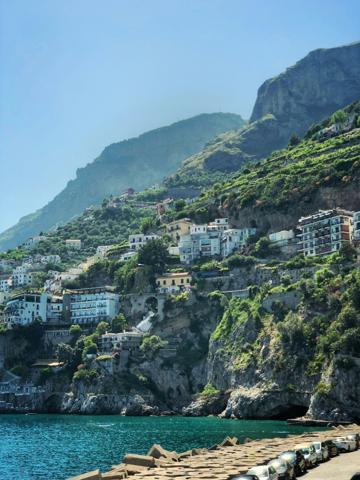
Vertical villages, lemon terraces, Capri offshore, Naples up the road. Coast, island, and city, sometimes all in the same day.
Last reviewed July 2026
Euros, and cash for the trattorias. Come in May, June or September; August is a crush, and half the coast shutters November through March. Italian first, English wherever the boats dock. Not a budget coast: plan €200–500 a day, round up a euro or two instead of tipping, and bring a two-pin adapter.
The Amalfi Coast is not actually one place. It's nine towns spread across forty kilometers of cliff, an island, a peninsula, and the loudest city in Italy thirty minutes north. Most people pick one home base and never leave it. Travel around instead, because the towns are genuinely different from one another and that is most of the point. And we love Naples.
Below: everything you actually need, and nothing you don't.
Praiano makes the easiest base, Ravello is worth a night of its own, and Naples is thirty minutes north and far too good to skip.
The region is best in late May, early June, and September. July and August are heat, traffic, and prices that don't translate. Most hotels close November to March. If you can only go once, go the second week of June.
Hotels close, ferries scale back, the coast goes quiet in a way that isn't charming; it's just shut. The window where Amalfi is itself is narrower than the brochures suggest.
Most of the coast shuts November to March. Le Sirenuse, Il San Pietro, Santa Caterina: all dark. If a place is open in February, ask why.
Ferragosto (August 15) is the worst day to be on a ferry in Italy. Italians get the entire month off and most of them come here. €€€€€ rooms, 40-minute boat waits, no walk-in tables.
Late May through mid-June, or the back half of September. That's the trip the photographs were sold on. Everything else is a tradeoff.
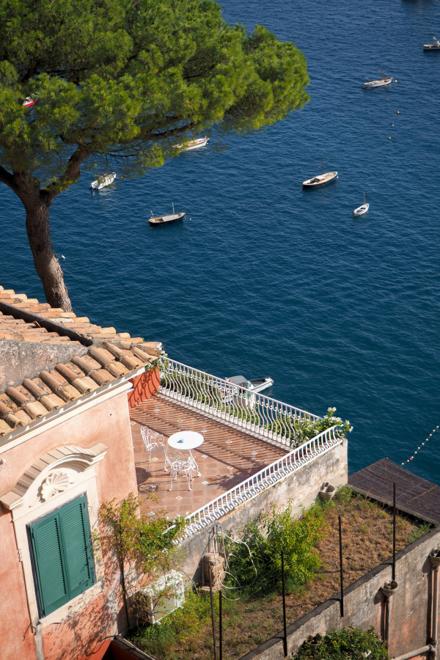
Nine towns is more than a week can hold. Two bases, three at a stretch, and the rest become a ferry ride and an afternoon.
Nine places worth your time, in the order you should think about them. Pick two or three as bases. The rest are day trips by ferry or hire car.
Vertical, photogenic, expensive. Stay one night, photograph it from the water, move on. Le Sirenuse is the hotel everyone's heard of. Franco's Bar opens to non-guests at 5 p.m. and the line forms around 4:45.
Ten minutes east of Positano, half the noise, sunsets facing west. A real town with residents and a fishing tradition. Casa Angelina is the hotel. The Sentiero degli Dei trailhead is above. Marina di Praia is below.
365 meters up the mountain. Quieter, ten degrees cooler in July, home to Villa Rufolo and Villa Cimbrone. The Terrace of Infinity at Villa Cimbrone is the photo. Caruso and Palazzo Avino are the rooms. Music festival runs July through August.
The Duomo di Sant'Andrea is worth the stop: a striped Arab-Norman façade at the top of a long staircase. Beyond that, it's buses, ferries, and tour groups passing through. Use it as a ferry base. Pizzeria Donna Stella keeps a lemon-pergola courtyard behind the Duomo that the foot traffic walks straight past.
A piazza with two restaurants, a pebble beach, almost no one. The closing scene of The Talented Mr. Ripley was filmed here. Le Arcate is the local trattoria, built into the rock wall that holds the town up. Twenty minutes here is worth two hours in Positano.
Tiny, almost completely overlooked. The sfogliatella Santa Rosa is traditionally traced to the convent above town. The Fjord di Furore — a narrow inlet between two cliffs spanned by a single road bridge — is twenty minutes east. Go before 11 a.m.
Better than its cruise-ship reputation. North side of the peninsula, looking across the Bay of Naples toward Vesuvius. The old town away from Piazza Tasso is worth the walk, and it's the ferry hub for everything: Capri, Positano, Naples. Stay one night, especially if you're flying through Naples.
The day-trip version (ferry in, bus, chairlift, ferry out) is forgettable. The better Capri is a private boat for two hours around the Faraglioni, a swim below the Tragara, lunch at Marina Piccola, a 5 p.m. ferry out. If you sleep here, do it in Anacapri, not Capri Town.
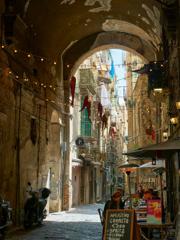
Don't skip Naples. Forty minutes north of Sorrento by train. Pizza, the museums the museum that holds everything pulled out of Pompeii. Spend a full day. Eat at Sorbillo or da Michele. Walk the Spanish Quarters. Don't fight the chaos; it's load-bearing.
Travelers tend to spread their nights evenly across nine towns, which is fair to the towns and bad for the trip. Here's the allocation we'd recommend for seven nights, and which towns work better as day visits.
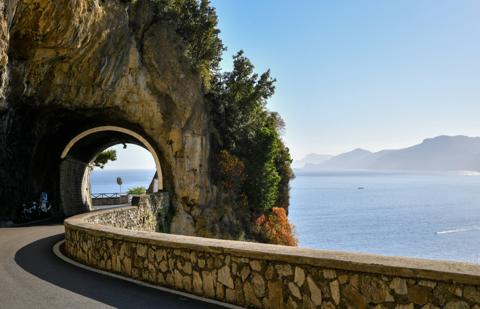
Forty kilometers of cliff road, ferries that don't always run, and tour buses going the other way. Most guides duck this. Here's the verdict for every leg of the trip.
| Route | Ferry | Hire car | Driver / taxi | SS163 bus |
|---|---|---|---|---|
|
Naples airport → Positano
85 km · The arrival
|
Not direct
Train to Sorrento, then ferry
~3 hr · €25
|
Possible
Stressful first drive
1.5 hr · €60–80 + parking
|
The call.
Pre-booked car, door to door
1.5 hr · €150–200
|
Skip — three legs. |
|
Positano ↔ Amalfi
17 km on the SS163
|
The call.
Direct, fast, no traffic
25 min · €10
|
Avoid in summer
1.5–2 hr in July/August
30 min off-season
|
If ferries are out
Same SS163 traffic problem
€100–150 one way
|
Cheap, slow
SITA bus, standing room
1 hr · €3
|
|
Positano ↔ Capri
By sea only
|
The call.
NLG or Alicost · daily
50 min · €23
|
No road. Sea only. |
Private boat charter
The luxury version
From €400 one way
|
No bus. Sea only. |
|
Sorrento ↔ Capri
The ferry highway
|
The call.
Every 30 min in season
20 min · €22
|
No road. Sea only. |
Private boat
Luxury option
€300–500
|
No bus. Sea only. |
|
Amalfi → Ravello
365m up the mountain
|
Ravello is inland. |
Doable
Steep switchbacks
20 min
|
The call.
Local taxi from Amalfi piazza
20 min · €30
|
SITA bus
From Amalfi piazza · hourly
30 min · €1.50
|
|
Sorrento → Naples / Pompeii
North of the peninsula
|
Naples only
Hydrofoil to Molo Beverello
40 min · €15
|
For Pompeii
Naples city traffic is brutal
1.5 hr · €45
|
Day-trip driver
For Naples + Pompeii combined
€280–350 full day
|
The call.
Circumvesuviana train
Pompeii 30 min · Naples 65 min · €5
|
Drag table to scroll →
Lemons from terraces above the road, fish landed that morning, mozzarella from buffalo that live thirty minutes inland. Skip the panoramic-terrace tourist menus; the good rooms are family-run.
Stand at the bar. Order in Italian. Cornetto al limone is the regional move. Sit-down breakfast is for foreigners and people on holiday from the holiday.
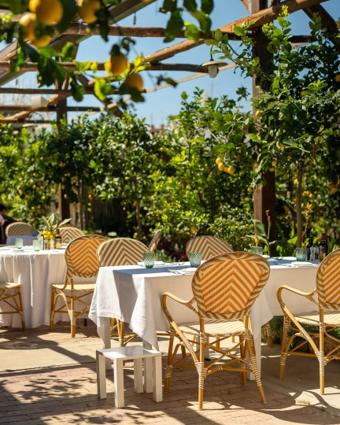
A garden of citrus trees and a pasticceria since 1950, with a piano in the corner. Go in the morning for the cornetto al limone; take it to the beach.
Visit websiteHalf design store, half breakfast room: cold-pressed juices, eggs treated seriously, white-on-white interiors. After three days of cornetti, this is the correction.
Visit websiteSix generations of the same family since 1830, in front of Amalfi's Duomo, serving the sfogliatella Santa Rosa, the recipe invented at the Conca dei Marini convent in 1681 and refined here. Order it warm with espresso, standing at the counter, before 10 a.m.
One of four bars on the Piazzetta, and the one that carries the legacy of torta caprese, the flourless almond-and-chocolate cake Carmine Di Fiore reportedly stumbled onto in his island workshop in 1920, when he forgot the flour. Stand at the counter before the 9:30 ferry lands; by 11 it's a different place.
The places you actually want at 2 p.m. between a beach and a ferry. Most are reachable by boat.
A wooden pier over the sea, the De Simone family since 1958, food grown on their farm up the hill. Spaghetti alla Nerano comes from this village, and it is the house dish here.
Inaccessible by road; the family's free shuttle boat leaves Positano's main pier hourly between 10 and 1 (look for the red fish on the mast). Mozzarella grilled in lemon leaves is the dish; beach beds for the afternoon.
A ground-level courtyard off an alleyway six minutes from Amalfi's Duomo: twelve tables under a low, sprawling canopy of lemon-pergola branches, almost no tourists. Wood-fired pizza and hand-cut gnocchi; reserve a few days ahead, because the regulars know about all twelve.
Visit websiteBuilt into the rock wall that holds Atrani up, an honest family-run trattoria with a small terrace facing the pebble beach. Scialatielli with the morning's mussels and clams is what to order.
The tables worth booking weeks ahead. Months for a few of them.
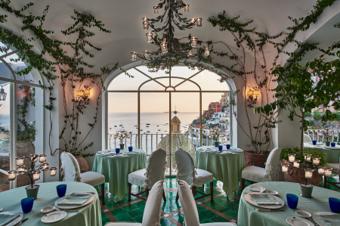
Photo: Brechenmacher & Baumann · Courtesy of Le Sirenuse
Le Sirenuse's celebrated candlelit dining room: 400 candles at dusk, live music drifting through hand-painted tiles, every table looking out to sea. Executive chef Gennaro Russo cooks Campanian classics without overworking them; recommended in the Michelin Guide. Book on opening day for July or August.
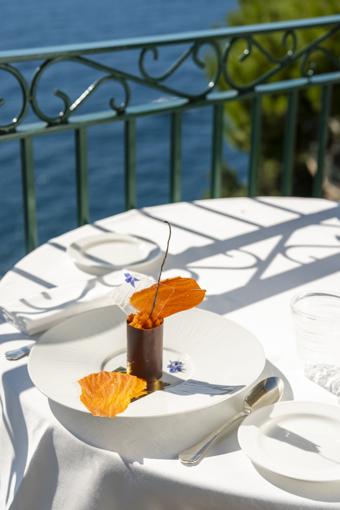 Courtesy of Zass at Il San Pietro
Carved into the cliff a kilometer outside Positano, mostly invisible from town and sea. Chef Alois Vanlangenaeker holds a Michelin star for cooking that draws on the hotel's terraced gardens above.
Visit website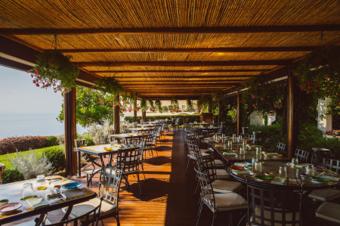
Courtesy of Caruso, A Belmond Hotel
Belmond's 11th-century palace high above the sea in Ravello, with the infinity pool on the same terrace as the dining room. Cooler in summer than anywhere on the coast below. The terrace faces east over the Gulf of Salerno, so come at sunrise or for the late-afternoon gold on the water; the sunset itself happens behind the ridge above town, not in front of you.
Visit websiteTwelve candle-lit tables on a terrace looking back at Positano from above, at Zeffirelli's old house, now a four-villa hotel that hosted Maria Callas, Leonard Bernstein and Rudolf Nureyev. The hotel is closed to non-guests; dinner is the workaround. Reserve three to four weeks ahead.
Visit websiteThree generations of the Iaccarino family, one Michelin star (2026 Guide), and a working organic farm at Punta Campanella that supplies the kitchen. Pair the tasting with the wine flight; they'll arrange a farm tour on request.
Visit website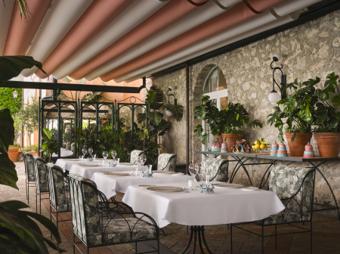
Courtesy of Palazzo Avino
Ravello's pink palazzo, with a frescoed 12th-century dining room and a Michelin star; less-touristed than the Caruso. The kitchen sources almost everything within a 30-kilometer radius; the terrace in summer is the more intimate fine-dining moment.
Visit website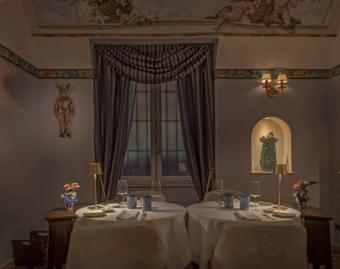
Courtesy of Ristorante La Caravella
Open since 1959. Listed with one Michelin star in the Michelin Guide Italy 2026. A frescoed dining room hung with vintage Amalfi ceramics and old-master oils. Formal in the old-school way; the historic tasting menu walks through Amalfitana cooking dish by dish.
A regional category because, frankly, you cannot come to Campania and not eat a margherita in Naples.
Open since 1870 with more than a century and a half of Neapolitan opinion behind it: margherita or marinara from €5.50 (variations with extra mozzarella push to €6.50–7), wet dough, leopard-spotted cornicione. Take a number outside and eat at a shared table; the line moves, but in summer plan on it.
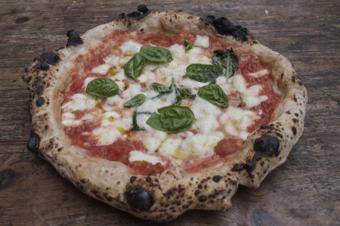
Courtesy of Concettina ai Tre Santi
Ciro Oliva's great-grandmother Concettina opened this in 1951; the fourth-generation Oliva turned it into a destination with wood-fired tasting menus that walk through Naples pizza's history: fritta, classic margherita, contemporary versions with smoked provola and Cetara anchovies. The Sanità neighborhood walk to get there is half the experience.
Visit websiteThe dough geek's pizzeria. Ciro Salvo trained two decades before opening this; his 24-hour cold ferment makes the crust noticeably lighter and more digestible than older-school Naples spots. The seating, unusually, is comfortable.
Visit websiteWhere to drink across the region, in order of how late you want to be out.
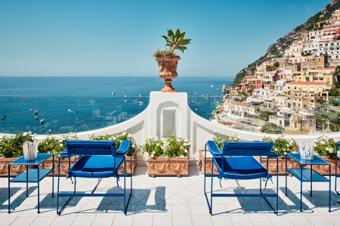
Photo: Brechenmacher & Baumann · Courtesy of Le Sirenuse
Stand-up bar at Le Sirenuse: no reservations, first-come for a terrace looking straight down over Positano. Opens 5 p.m. daily in season; the queue forms around 4:45; a Negroni runs about €20 (premium cocktails and rare spirits climb higher).
Lemon granita is the regional move. Done well, it costs about two euros.
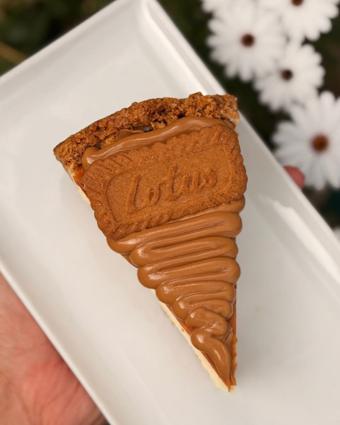
Courtesy of Collina Bakery
Two operations: the main bakery sits at the top of the pedestrianised town on Via Pasitea, near the vehicle drop-off (full pastry menu, cards accepted). In summer they run a seasonal granita cart down at Spiaggia Grande: sfusato lemons, ice, sugar, €3 in a paper cup; cash is faster than fumbling for a card. Eaten standing on the beach with a wooden spoon, the snack that explains why the Romans were obsessed with this coast.
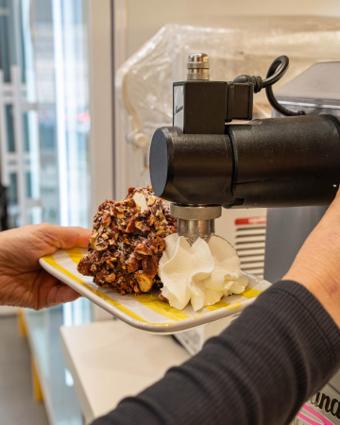
Courtesy of Gelateria David
Family-owned in Sorrento since 1957 (currently the Gargiulo family, grandsons of founder Augusto Davide), with sfusato lemons sourced from local Sorrento growers and fior di latte from an Agerola cow's milk dairy (the Agerolese is the autochthonous Lattari Mountain breed); the result is denser, less sweet, more recognizable than the chains. Walk five minutes off Corso Italia for half the price and twice the quality.
Visit websiteCapri's historic gelateria, two minutes from the Piazzetta and open since 1973. The waffle iron at the door is the giveaway: every cone made fresh, which is why the line moves slowly and nobody minds. Almond and pistachio are the calls; skip the seasonals.
A pastry laboratory on the beachfront in Minori, built on the coast's own lemons and ricotta. The ricotta-and-pear cake is non-negotiable; the delizia al limone is the one to order. Plan the trip to Minori around it.
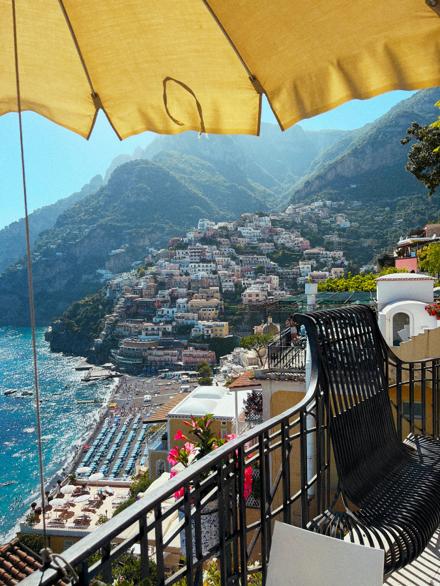
On this coast you are paying for the elevation and what it looks out at. The fifteen below are sorted by what that costs.
Fifteen hotels across the coast, the peninsula, and the island. Every one justifies its rate. Click any card to expand the full picture.
Run by the fourth generation of the same family. Alberto Moravia, Jean-Paul Sartre, Elsa Morante and Totò are among the literary and cultural figures the property names as having "broken bread" with Mariantonia and her descendants over the decades. The garden is the original lemon grove, still farmed; breakfast is served under it. Anacapri is the half of Capri to stay in: residential, walkable, ten minutes by bus to Capri Town when you want it. Better food, fewer crowds, half the price of the marquee Capri properties.
Most rooms face the sea directly, with hand-painted Vietri tile floors and small balconies. The rooftop has a small infinity pool with a view straight across the Gulf of Salerno and down the rugged Amalfi coastline (Capri is on the far side of the Sorrentine Peninsula, blocked from this vantage). Service is family-run rather than corporate. Useful as a base for ferry hopping (three minutes to the dock), and you can walk to Atrani in twenty.
Twelve sea-facing rooms in the main house, built by the grandparents in the 1950s and transformed into the current design-forward landmark by their grandson (owner, interior designer and architect Marco de Luca) as a love letter to nautical interiors: striped floors, red coral sculptures, vintage Italian magazines stacked in the lounge. Down the cliff path toward the harbor, a separate Vela Suite apartment runs as a hyper-exclusive independent tier. Run as a guesthouse rather than a hotel: the family makes the cakes for breakfast, the staff learn your name fast. There's a hidden staircase down to the fishing village below; most guests don't find it until day three.
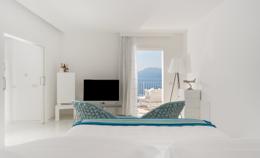 Suite Angelina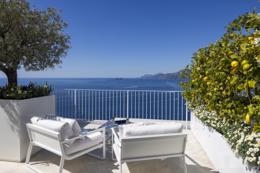
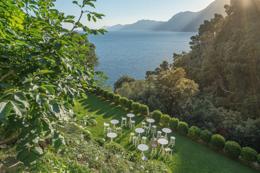 Garden Terrace
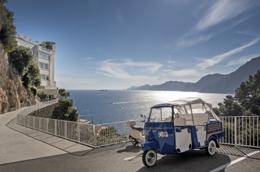 Entrance
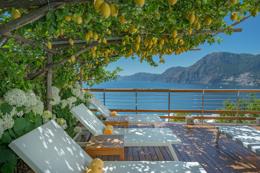 Lemon Pergola
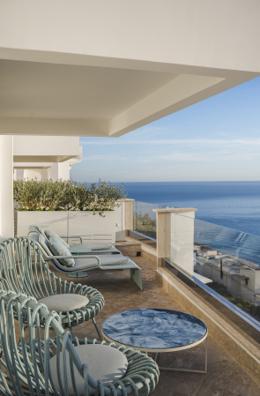 Azure Suite Terrace
Courtesy of Casa Angelina
A working art collection (Picasso, Klein, contemporary glass) integrated through the public spaces. The architecture is uncompromising (everything white, every angle facing the water), and the position in Praiano means sunset rather than sunrise, which is the half of the coast golden hour favors. Breakfast in Un Piano nel Cielo, the glass-walled cliff-top dining room, is one of the more theatrical mornings you can have at a hotel.
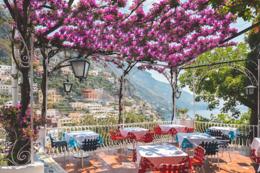
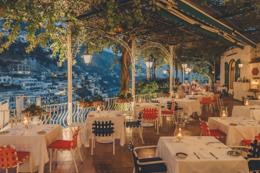
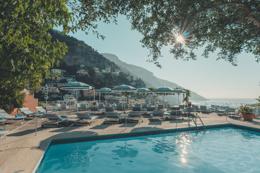
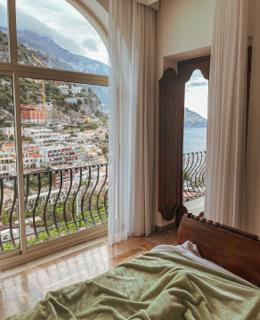
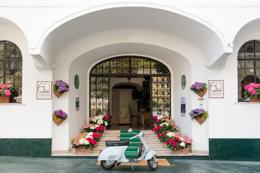
Courtesy of Hotel Poseidon Positano
Bruno Aonzo and Liliana Del Bosco opened it in 1955 and three generations of the family are still on the property: Monica and Marco, with Liliana and Margherita in the third generation. The position is mid-cliff, with no extreme stairs from the road and the view is the one you picture. Mid-cliff, family-run, and quieter than the grand Positano names.
A five-minute walk from the Piazzetta but tucked on a residential street where you'd never know it was there. Interiors by Milan-based architect Giampiero Panepinto: bold colors, vintage furniture, hand-painted tile in every bathroom, custom fabrics, themed suites (the Pan Am, the Capri). The pool is heated; the rooftop bar is a quiet alternative to the chaos of the Piazzetta.
Built 1822. Fully overhauled by the Oetker Collection in 2023 (their first Italian property) with cool-and-coastal interiors that updated the property without flattening the history. 50 keys (32 rooms + 18 suites). The rooftop bar buzzes from 6 p.m. with DJ sets, the private La Palma Beach Club at Marina Piccola brings back vintage-Capri glamour, and the location (steps from the Piazzetta) means you can stagger home from anywhere.
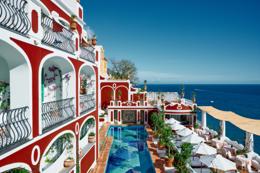 The famous pool
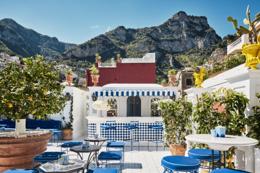 Franco's Bar at sunset
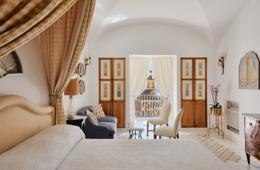 La Sponda dining room
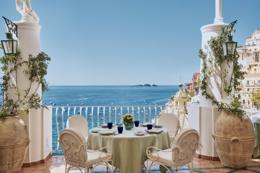 Tiled hallway
Photos: Brechenmacher & Baumann · Courtesy of Le Sirenuse
The Sersale family converted their summer home into a hotel in 1951 and the same family still runs it. Hand-painted tiles, lemon trees in every public space, white-and-red exterior, and a pool set into the terrace above the village. Two restaurants (one in the Michelin Guide), three bars, a spa, and a position on the cliff at the centre of the view. The rate is not casual, and neither is the hotel. Every detail (the tiles, the art program, the family still on the property) justifies the bill.
Carlino Cinque opened it in 1970 and his family has run it ever since. Architecturally, the hotel is invisible from the sea (buried into the rock face), and a private elevator takes you down through the cliff to a private beach with a tennis court. Quieter than Le Sirenuse, more residential, with the discreet glamour of a place that doesn't advertise. Ten cascading terraces of organic gardens supply the kitchen.
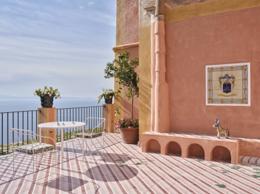 La Cascinetta
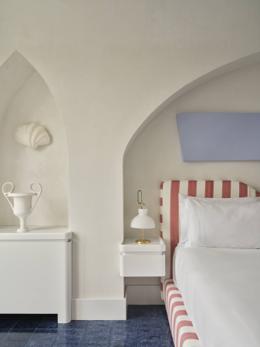 Aquamarine suite
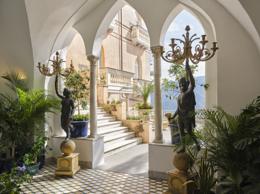 The entrance
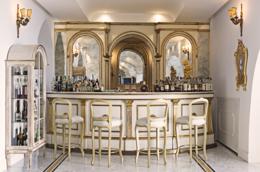 Ravello terrace
Courtesy of Palazzo Avino
Originally an aristocratic family residence; bought and restored in the 1990s by the Avino family who still run it. Pink-walled, Murano chandeliers, frescoed ceilings; details newer hotels genuinely don't have. The Clubhouse beach club is a 15-minute drive down the mountain and is the rare property in Ravello with sea-level access. Rossellinis, the in-house restaurant, holds a Michelin star.
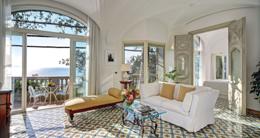 Garden Suite Il Pino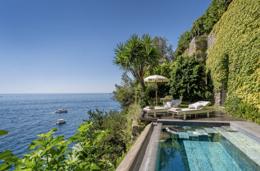
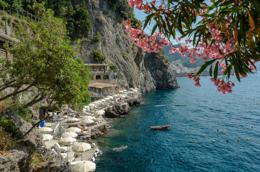
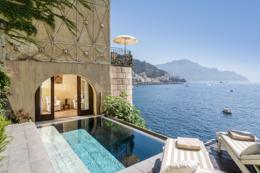
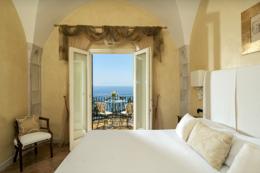
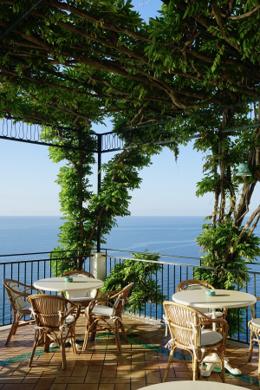 Bar La Terrazza
Courtesy of Hotel Santa Caterina
The Gambardella family opened it as a hotel in 1904; four generations later they're still on the property, which tells you everything. The architecture, a private elevator carved straight through the rock face down to a beach club at sea level (a smooth, cave-like shaft enclosed in the cliff itself), looks obvious now and took nerve then. Rooms are antique-furnished, hand-tiled, with marble bathrooms and canopy beds. Glicine, the fine-dining room, holds 1 Michelin star under chef Giuseppe "Peppe" Stanzione; the rooftop Senzafine debuted spring 2025 and runs its first full season in 2026. The spa sits in the citrus garden.
The De Siano family (also owners of San Montano on Ischia) and the Orlacchio family transformed a 1960s hotel here over almost four years. 31 rooms and 21 suites, every one with a sea view, custom Italian furniture, and tilework that makes the case on its own. Three restaurants, including Alici, which holds 1 Michelin star under chef Crescenzo Scotti. An engineered elevator shaft carved directly through the rock face drops guests down to a private beach club below (a fully enclosed subterranean shaft, not a transparent cabin). Relais & Châteaux member.
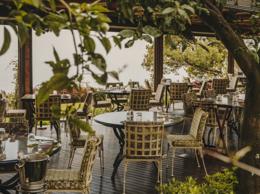 Belvedere restaurant
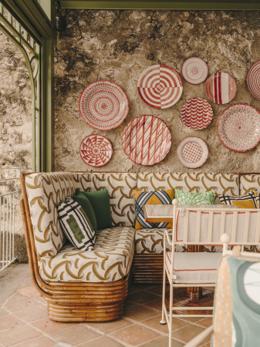 Infinity pool
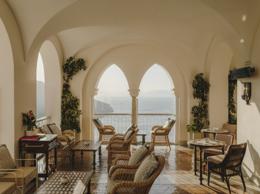 Guest suite
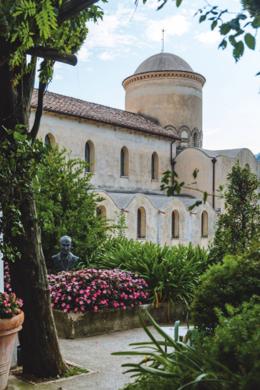 11th-century palace
Courtesy of Caruso, A Belmond Hotel
An 11th-century palace in Ravello, run by Belmond, with a heated infinity pool that ends at a thousand-foot drop. The pool ends at a thousand-foot drop, and it lives up to the photos. Frescoed ceilings restored to museum standard, a vegetable garden that supplies all four restaurants, free vintage Fiat tours of the gardens at sunset. If you book one night here, make it one of the last nights of the trip; it's hard to come down from.
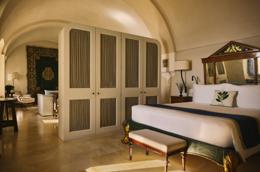 Deluxe Open Space Suite
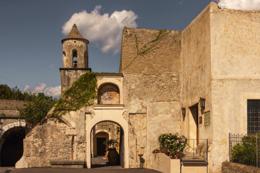 The entrance
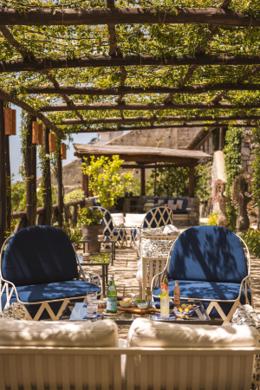 Bar La Brocca terrace
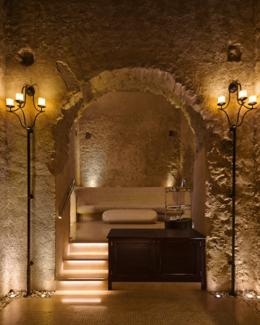 Spa thermal relaxation
Courtesy of Monastero Santa Rosa
Twenty rooms in a 17th-century Dominican convent, painstakingly restored: the original cloister, chapel, and refectory are still standing and still in use. The infinity pool lives up to its reputation; the spa is built into the convent's vaulted cellars. Il Refettorio (1 Michelin star) sits in the original dining hall under chef Alfonso Crescenzo, with herbs from the convent garden, replanted and tended by the hotel since the restoration. Quieter and more contemplative than the famous Positano hotels, and frankly more interesting.
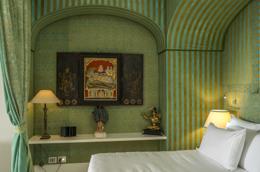
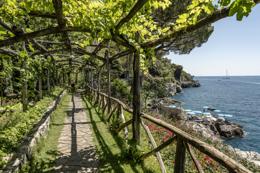
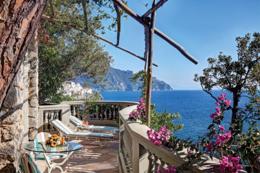 Garden Suite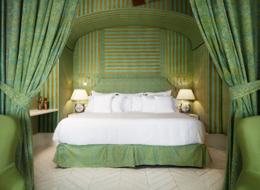
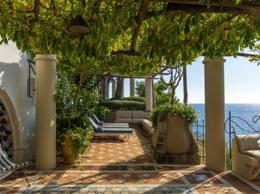
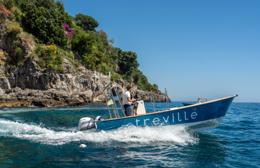
Courtesy of Villa TreVille
Zeffirelli (the film director) bought it in the 1970s and entertained Maria Callas, Leonard Bernstein, Rudolf Nureyev, Liza Minnelli, Elizabeth Taylor and Richard Burton over decades. Zeffirelli sold the property in 2007 to hotelier Giovanni Russo, who converted it into a 16-suite hotel; the Friedland family acquired it in 2013. Most of the original furniture, art, and books remain. There's no traditional reception; you're shown to your villa by name. The hotel runs a boat shuttle into Positano. Ask the hotel directly about dining if you are not staying.
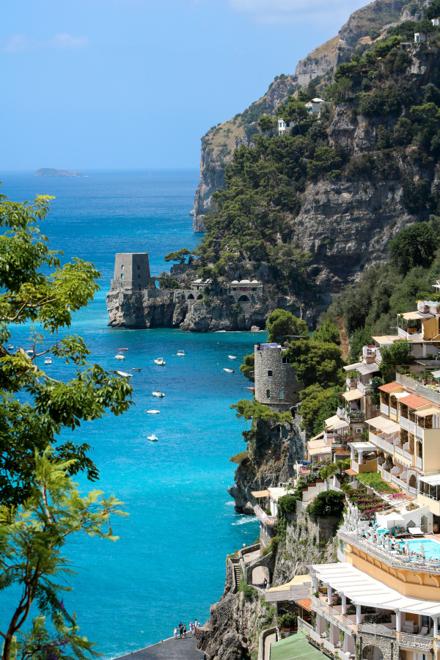
Most of this coast reads better from a boat than from the road, and the coves below the cliffs are only reachable that way. What needs booking is flagged below.
Know what requires advance booking, what's free, and what the crowds skip entirely.
Spiaggia Grande, Positano · Family-owned since the 1940s
Eight hours, your own captain, the route shaped around what you want: Capri grottos, hidden coves, lunch at Da Adolfo or Lo Scoglio. Lucibello has been the established operator on the coast since the 1940s, when founder Salvatore Lucibello bought his first two rowboats; three generations of the family now run the fleet. The thing to do here.
From Capri's Marina Piccola
If you're staying on Capri or arriving for the day, hire a small boat at Marina Piccola for two hours (~€200) and circuit the island: Faraglioni rocks, Grotta Bianca, swim stops in coves the ferries don't enter. The Blue Grotto queue is brutal in summer; the other grottos are nearly as good and almost empty.
Conca dei Marini · Sea cave
A sea cave where sunlight passing through underwater openings makes the water glow green. Quieter than Capri's Blue Grotto, and less of a circus. Boat access from Conca dei Marini, or descend the elevator from the SS163. Twenty minutes inside.
Furore · 10 min east of Praiano
A narrow inlet between two cliffs spanned by a single road bridge, with a pebble beach below reachable by stairs. Less crowded than its reputation suggests. Go before 11 a.m.
Praiano · Below SS163
A small fishing beach wedged between two cliffs. Wooden boats pulled up on the pebbles, two trattorias above, and a clear swim spot on this stretch. Easier to reach than Furore's beach and almost as photogenic.
Atrani · Walk from Amalfi via tunnel
Walk through the tunnel from Amalfi at 6 p.m., have a glass of wine in the piazza, watch the light turn the cliffs orange. The pebble beach is mostly empty by then. Stay twenty minutes; it beats two hours in Positano.
Capri · Northwest coast · Rowing boat only
A surreal sea cave where the water glows electric blue from sunlight filtering through an underwater cavity. Tiny rowboats, locals who often sing while you float inside, the whole experience lasts about five minutes. Touristy, undeniably, but the color is real and there's nothing else like it. Go early or late to avoid queues.
Anacapri · Highest point on Capri
Twelve minutes in an open single-seater chairlift gliding silently above lemon trees, vineyards, and villa rooftops. The 360-degree view from the top runs from Vesuvius to the Faraglioni to the open Tyrrhenian. Late afternoon for the softest light. The hike up is also possible if you've earned the calves.
Bomerano (Agerola) → Nocelle (above Positano)
The coast's signature hike. Seven kilometers of clifftop trail, mostly downhill if you start in Bomerano, with views across the entire coast that no road can match. Three to four hours at a slow pace. End in Nocelle, take the bus down, swim. Best mid-morning, after the first wave of group hikers and before the heat.
Ravello · 15 min walk from main piazza
The Terrace of Infinity is a marble balustrade lined with classical busts, opening onto a thousand-foot drop. Get there before 10 a.m. or after 5 p.m. for a clean shot. The gardens take an hour to walk.
Ravello · Off main piazza
The other great Ravello garden: 13th-century, with two terraces and an Arab-Sicilian cloister. The Ravello Festival (early July to late August) hosts orchestral concerts on a stage built over the cliff at the lower terrace. Buy festival tickets months ahead.
Maiori → Minori · 3 km, 1 hr
The trail that connects Maiori and Minori through working lemon groves. Far less famous than the Path of the Gods and the more direct route into how the region actually grows its food. Stone-walled terraces, some 800 years old.
Pompeii 1 hr from Sorrento · Herculaneum 45 min
Pompeii is the famous one; the heat, crowds, and scale make it a slog without a guide. Herculaneum is smaller, better-preserved, and a fraction of the visitors. Pair either with a half-day on Vesuvius and a stop in Naples for pizza.
Naples historic center · Half day
Spaccanapoli is the straight line that bisects the old city: markets, shrines, palaces, churches stacked on top of older churches. End in the Sanità neighborhood.
Above Amalfi · Hike from Pontone or Scala
A micro-jungle of mossy rock, cascading streams, and freshwater pools hidden under ancient chestnut trees, less than thirty minutes inland from the Amalfi coast. Counterpoint to the cliffside glamour: cool, green, slow, almost no one. Bring a swimsuit and reef shoes; the lower pools are worth a swim.
Anacapri · The Axel Munthe house
Built by Swedish doctor Axel Munthe at the turn of the 20th century (construction begun 1895) on the ruins of a medieval chapel on a site once occupied by a Roman villa of Tiberius. Roman antiquities, perfumed gardens, and a shaded pergola overlooking the gulf. Pair with the Monte Solaro chairlift, which leaves from the same village. Owned today by the Swedish Foundation Munthe established in his 1948 will.
Ravello · Family kitchen
Hands-on Campanian cooking in a working family kitchen above Ravello. Lemon cake, pasta from scratch, eggplant parmigiana, end the morning eating what you made on a terrace with the gulf below. Mamma Agata started cooking professionally as a teenager; her daughter Chiara runs the classes now.
Furore · Cantine Marisa Cuomo
Vines grown on terraces above the cliff at Furore, producing Costa d'Amalfi DOC whites from native grapes (fenile, ripoli, ginestra) and reds (tintore, piedirosso). The winery names two flagship labels, the Fiorduva white and the Furore Rosso Riserva.
Capaccio · 2 hours from Positano
An organic buffalo farm producing mozzarella di bufala on site. Tour the dairy, see the buffalo, watch the cheese being made, eat it within an hour of production. Pair with the Greek temples at Paestum next door. Worth the day.
Vietri sul Mare · Eastern end of the coast
Vietri is the ceramic town of the Amalfi Coast; the brightly painted tiles you see on every dome and stair riser are made here. Walking the main street is a half-day in itself: dozens of workshops, real artisans, prices a fraction of what the same pieces cost in Positano boutiques. Most ship internationally.
Sorrento · Various producers
Limoncello on the coast is made from sfusato amalfitano lemons. Done well, it's a digestif. Done badly, it's syrup. Skip the gift shops; book a producer tour instead: Villa Massa in Sorrento walks you through the lemon groves and the production process, then a tasting on a terrace over the Gulf of Naples.
Praiano · Below SS163
Italian beach clubs are an institution: rented umbrella, two sun loungers, a waiter who brings cold drinks and panini, sometimes a small restaurant for lunch. La Gavitella is the rare west-facing club on this coast, but sunbed service wraps at 7 p.m., often before the sun is down in peak summer. Book the restaurant terrace for the final sunset view from a table.
Capri Town · Founded 1948
A Capri perfumery that still bottles by hand: local lemon, wild fig, mint, rosemary. The flagship shop on Via Camerelle is small, atmospheric, run by people who know fragrance. Their Mediterraneo and Numero Uno are the house classics, both unmistakably island.
Capri Town · Founded 1947
Capri's defining jewelry house, co-founded in 1947 by Pietro Capuano and Salvatore Aprea on Via Camerelle and run today by Aprea's heirs (Gabriele, Maria Elena, Costanza). The signature Campanella charm (a tiny coral or gold bell) traces back to a 1944 peace bell Capuano made for FDR; the boutique was a favourite of Audrey Hepburn, Grace Kelly, Jackie Kennedy and Greta Garbo through the 1950s and '60s. Each piece is handcrafted in Naples; vintage capsule collections are sometimes available if you ask the archivist.
Positano · Family-run since the late 1960s
Unmistakably local beach-resort wear, made on the coast for half a century. Cotton, linen, embroidered kaftans; pieces that read as costume in New York and exactly right on a Praiano terrace. Open daily; mob it before lunch or you'll wait.
Ravello · Hand-painted family workshop
Hand-painted Mediterranean ceramics in whimsical patterns: espresso cups from €20, hand-decorated platters up to €300+. The Ravello workshop has been in the same family for three generations. They ship internationally, so don't stress about luggage weight.
Conca dei Marini · 17th-century vaulted cellars
Set inside the original vaulted cellars of a 17th-century convent. Treatments use Santa Maria Novella products; the thermal suite includes a steam cave, hydrotherapy pools, and a tepidarium with vaulted ceilings. Day passes are limited; reserve in advance, this is not a walk-in.
Marina Grande, Capri
Sleek white-on-white wellness space inside a small Capri hotel. Bespoke treatments, a private hammam, lymphatic drainage, aroma facials, island-sourced scrubs. Try the volcanic-stone detox ritual, the local specialty. Open to non-guests on availability; book a few days ahead in summer.
Positano · Le Sirenuse boutique
Le Sirenuse's in-house boutique on Via Cristoforo Colombo sells embroidered shirts, tailored linens, hand-blocked kaftans from the line Carla Sersale founded, now designed by her niece Viola Parrocchetti. Resort wear with taste; pieces you keep wearing for ten years after the trip.
Ravello · Belmond Caruso
The pool club at the Belmond Caruso, high above the sea in Ravello, open to non-guests by reservation through the concierge. Cabanas can be booked by the day. Pasta and pizza classes run daily at €88 a head and must be booked in advance.
Coast, island, city. Skip whichever day doesn't fit. The plan errs toward fewer things and more time in front of them.
Via dei Mulini · Positano
Stand at the counter for cornetto al limone and cappuccino. The garden terrace is wasted on the morning crowd; locals come here for fifteen minutes and leave. Do that.
West end of Positano · 10 min walk from the center
The Spiaggia Grande is the famous one. Fornillo, ten minutes west around the cliff path, is the better swim: quieter, smaller pebbles, and the sun hits it earlier. Walk back along the same cliff path for the framed views of Positano.
Marina del Cantone · 30 min by car or boat from Positano
The reservation has been on hold for a month. Spaghetti alla Nerano, mozzarella from the family farm, lemon delight to close. Sit on the wooden pier over the water. This is the meal you'll talk about. Take the boat back.
Bomerano (Agerola) → Nocelle
Drive or bus up to Bomerano, walk the trail downhill toward Nocelle. The cliff views start about twenty minutes in. Three hours, mostly down. Take the 1,500-step staircase to Positano if you have the knees, or the bus from Nocelle if you don't.
Via Cristoforo Colombo 30 · Positano
Get to the door by 4:45 if you want a terrace edge; they open at 5 p.m. daily in season. A Negroni runs about €20 (premium cocktails and rare spirits climb higher); the view runs straight down the village to the sea. One hour, then dinner.
Above Positano · Twelve candle-lit tables
The hotel is closed to non-guests by policy; dinner is the workaround. Twelve tables on a terrace looking back at Positano from above: the view back at Positano from above, and the only way to eat inside the property where Maria Callas, Leonard Bernstein and Rudolf Nureyev used to stay. The proper end to a long day.
Via Pasitea · Positano
Cold-pressed juice, eggs, fresh fruit. A sit-down breakfast, which the coast mostly doesn't do. Order extra coffee to-go. The boat leaves Positano's main pier at 9.
Spiaggia Grande pier · Lucibello or similar
Eight-hour charter with a captain. Tell them you want the Faraglioni, a swim below the Tragara, the Grotta Bianca and Grotta Verde. Skip the Blue Grotto unless the queue looks short; the other grottos are nearly as good and almost empty.
Capri · Marina Piccola side
The boat captain drops you at Marina Piccola. Lunch at La Fontelina or Il Riccio (both €€€€); both are walk-up, both open-air, both technically beach clubs with excellent seafood. Negotiate this with the captain; he picks you up at 4.
Anacapri · Bus or taxi from Marina Grande
If the boat ends in Marina Grande, take 20 minutes to taxi up to Anacapri before the ferry back. Villa San Michele (built by Axel Munthe at the turn of the 20th century) holds his collection of antique sculpture in gardens looking across the gulf to Vesuvius. €10–12; verify on villasanmichele.eu.
Marina Grande, Capri
Take the 6:30 or 7 p.m. ferry: sunset on the water, no day-trippers, and you arrive in Positano just as the cliff lights come on. About 50 minutes. Sit on the upper deck.
Atrani-side hill · Amalfi
Wood-fired pizza in a hidden ground-level courtyard under a sprawling lemon-pergola canopy. Reserve a few days ahead. The pesto gnocchi is the unexpected order; the margherita is the classic. Casual, family-run, the neighborhood Italian dinner Positano doesn't really do anymore.
Sorrento → Pompeii Scavi · Circumvesuviana 30 min
The Circumvesuviana train from Sorrento goes directly to Pompeii Scavi for €3.20. Crowded, slow, but legitimate. Or hire a car and driver for the day, about €280, and worth it if you want to also see Herculaneum or Vesuvius.
Pompeii Scavi or Ercolano · Choose one
Get there at opening. Pompeii is the name everyone knows: vast, hot, crowded after 11. Herculaneum is half the size, twice as well-preserved, and a quarter as visited. Either one needs a guide; book the entry ticket online and a guide separately on GetYourGuide.
Via Cesare Sersale 1 · Naples Forcella
More than a century and a half of Neapolitan pizza opinion in one room. Margherita or marinara from €5.50; variations with extra mozzarella push to €6.50–7. Take a number, share a table, plan on 1–2 hours in line during travel season (20 minutes is a winter-opening anomaly, not the norm). The pizza from Eat, Pray, Love. Worth the line.
Naples historic center → Sanità
Walk Spaccanapoli (the dead-straight street that bisects the old city) east to west. Stop at Cappella Sansevero (book online; the Veiled Christ sculpture is unmissable). End in the Sanità neighborhood. Get a sfogliatella from a bar along the way.
Piazza Museo · Open until 7:30 p.m.
Everything pulled out of Pompeii is here: the mosaics, the bronzes, the secret cabinet of erotic frescoes. Two hours minimum. The context for what you saw at the ruins this morning.
Sanità · Naples
This is pizza treated as a restaurant. The grandson of the founder runs a tasting flight that walks through the history of the form: fritta, classic margherita, contemporary. Wood-fired and ambitious. Reserve a week ahead. Take the train or a taxi back to the coast after.
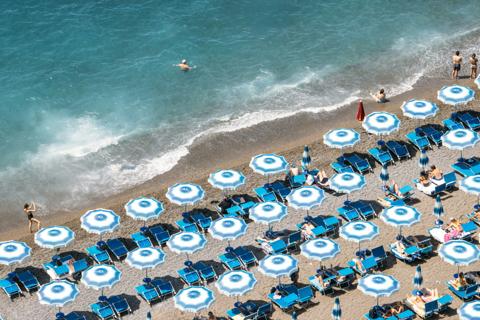
The coastal road is the experience and the obstacle. Forty kilometers of switchbacks carved into the cliff, blind corners, and tour buses going the other way. Hire a driver if you can't drive a manual. Better still, take ferries: Positano to Amalfi is twenty minutes by water and ninety by road in summer.
August is the month to work around. Italian families take their entire August holiday on this coast, room rates double, the SS163 becomes a parking lot, and many of the better restaurants close for two weeks (ferragosto). Late May, early June, and September are when the region is itself.
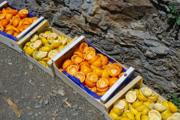
Sfusato amalfitano is a specific cultivar: long, thick-skinned, less acidic, more aromatic than supermarket lemons. The terraces you see climbing the cliffs are 800 years old. They're protected by IGP status. The good limoncello uses these and nothing else; the good granita too. Worth tasting the difference.
The day-trip version (ferry in, packed bus to the Piazzetta, ferry out at 5) is forgettable. Either go for a day with a private boat for the Faraglioni and a swim, or stay overnight in Anacapri after the ferries leave. Capri after 6 p.m. is the actual island. Capri at noon in August is a turnstile.
East-facing towns (Positano, Capri) get sunrise. West-facing towns (Praiano, Amalfi side of the headland) get sunset. Both are correct, but the difference matters in summer. Sunset hits the cliffs orange around 7:30 p.m. in June; the sunrise side photographs better in early morning.
Italian beaches are split between free public stretches and private clubs (stabilimenti) with rented umbrellas, sun loungers, and waiter service. €30–60 a day for a setup, double in season. Reserve in summer. The good clubs are a full-day commitment; don't try to clock-in for two hours.
Treated like the dodgy stop on the way to the coast. It isn't. The museums hold what was pulled out of Pompeii, and the streets are louder, more layered, and more honest than anywhere on the cliffs. Spend a full day. Watch your bag.
Every dinner restaurant on this list books out a week ahead in summer. The Michelin-starred ones book a month ahead. The boats (Lo Scoglio, Da Adolfo) work through hotel concierges or call directly; Italian phone manners required. Don't show up hoping.
Book a guide for Pompeii. The ruins are easier to read when someone explains how the buildings were used. Book the entry ticket separately on coopculture.it (€18) and a guide on GetYourGuide. Better yet, choose Herculaneum: smaller, better-preserved, half the visitors.
Coastal-Italian summer means linen, real shoes, and at least making an effort. Cover-ups for restaurants, the panoramic-terrace ones included. Shoulders covered for the Duomo and the cathedral in Ravello. Small effort, very visible result.
Tell us you're going to the Amalfi Coast. When, for how long, what you care about, how you travel. We'll send a custom itinerary in 72 hours: restaurants, hotels, activities, the whole map, built around you specifically. Two revision rounds included until it's right.
$85, one time.
Commission an itinerary →Delivered within 72 hours · Two revision rounds included


