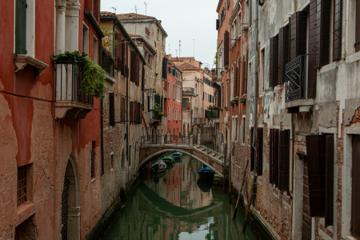
San Marco
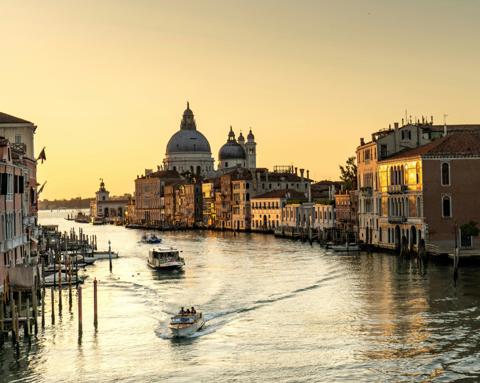
The famous oneThe piazza, the Basilica and the Doge's Palace, busiest between 10 a.m. and 4 p.m. Come at 7 a.m. or after 8 p.m. Stay in San Marco if you're booking the Gritti or Aman. Otherwise, base yourself in Cannaregio or Dorsoduro.
Still strange every time, however many photographs of it you have already seen. Cicchetti and an ombra at a bacaro counter for lunch, lagoon fish sitting down at dinner, and the vaporetto instead of a taxi. Check the Centro Maree forecast before you go; bring waterproof shoes if high water is expected.
Last reviewed July 2026
Euros, with cash for the cicchetti bars. Come April–May, or September–October; skip August. Acqua alta is most common from October through December, with November the peak. Italian and Venetian first, English in the tourist spots. Plan €180–700 a day (the splurges add up fast). round up, no more, and bring the two-pin C/F/L adapter. Venice keeps Central Europe time.
Venice is sinking, expensive, and overrun. Three days in any neighbourhood that isn't San Marco is really all it takes, on Venetian hours: cicchetti at 11 a.m. with a glass of white, the vaporetto at sunset rather than the gondola at noon, dinner at 9 p.m. in Castello.
Stay three nights. One in San Marco only if money is no object. Otherwise: Cannaregio or Dorsoduro. Walk everywhere; the alleys end in canals and the numbering is sestiere-wide, so navigate by landmark.
Sleep in Cannaregio, eat in Castello, drink in Dorsoduro. San Marco is best before 9 a.m. and after 7 p.m.
Best in late April–early June and mid-September–October. Carnevale (late Jan/early Feb) is a separate, brilliant trip but book a year out. August is hot, mosquito-heavy, and the canals smell. Acqua alta means flooded piazzas; check the forecast and pack rubber boots, which the city sells on the spot. The €5 day-tripper access fee applies on peak weekends April–July; overnight guests are exempt.
Venice is divided into six neighbourhoods called sestieri, historic districts that each keep their own rhythm. Base outside San Marco and walk between them across the bridges. The numbers on every door are sestiere-wide rather than street addresses, so navigate by landmark and not by number, which is a mistake you only make once.
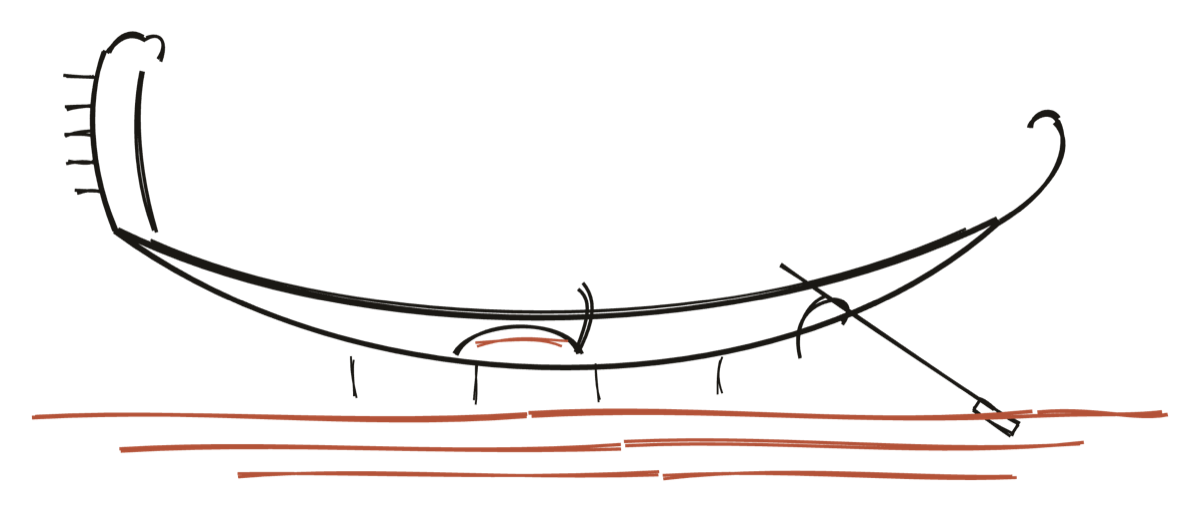
The piazza, the Basilica and the Doge's Palace, busiest between 10 a.m. and 4 p.m. Come at 7 a.m. or after 8 p.m. Stay in San Marco if you're booking the Gritti or Aman. Otherwise, base yourself in Cannaregio or Dorsoduro.
The northern sestiere, residential and busy at street level. Wide sunlit fondamente along the canals, the Jewish Ghetto (the original; the word was coined here in 1516), and the aperitivo strip along Fondamenta della Misericordia, about 600 metres of bars with tables on the water. Stay here for the bacari and the fondamente.
South of the Grand Canal, anchored by the Peggy Guggenheim, the Accademia, and the Punta della Dogana. Quieter than San Marco, more art-school than Cannaregio, with the Zattere promenade running along the Giudecca Canal, a straight kilometre of open water and sun, rare in a city of alleys. Strong on bacari (Cantine Schiavi, Al Squero) and gelato (Nico).
The Rialto Market is here: both the produce market and the open-air fish market (Pescheria opens 7:30 a.m., closed Sun + Mon). Get there at 7 a.m. for the spectacle, not 6; any earlier and you're staring at locked gates. The streets around it are the cicchetti circuit: All'Arco, Do Mori, Do Spade, Al Mercà, Dai Zemei all within five minutes of each other. Go hungry.
The sestiere stretching east from San Marco toward the Arsenale and the Biennale gardens. Working-class Venice on Via Garibaldi, Renaissance churches, and the seafood restaurant we'd send you to first (Alle Testiere) down an alley. Eat dinner here: Alle Testiere, Al Covo and Al Covino are all in Castello.
Murano for glass, Burano for the painted houses and lace, Torcello for the silence and the seventh-century basilica. Giudecca for the Cipriani if money is no object, the Redentore if not. Take the vaporetto north; half a day on Burano and Torcello together beats a full day chasing all four.
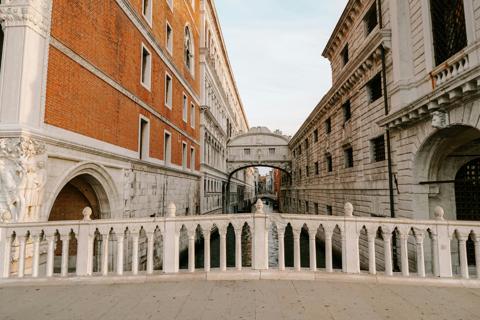
Venice eats in two registers: bacari for cicchetti and an ombra at the bar, then sit-down trattorias for lagoon fish at dinner. The fish comes off the Rialto market, the rice from the Veneto plain, the prosecco from the Conegliano-Valdobbiadene hills an hour north.
Breakfast is a coffee and a pastry at the bar, standing. The good pasticcerie are tiny and busy.
The Tonolo family pasticceria on Calle San Pantalon in Dorsoduro. Standing-room only, screaming-match ordering, packed with Ca' Foscari students and locals on their second coffee. The cream puffs (pistachio, dark chocolate, classic crema) are the headline; during Carnevale they sell frittelle and the line goes around the block.
Visit websiteA historic Venetian pasticceria, founded 1870 and still family-run across three locations: the Campo San Giovanni e Paolo branch (Castello) sits on the campo with the Verrocchio equestrian statue; Calle Fiubera (San Marco) is the one to use if you are coming off the piazza. Order the zaeti (cornmeal-and-raisin biscuits, the Venetian classic) and the tiramisù; sit-down costs more but the room is worth it once.
Visit websiteTwo minutes from Santa Lucia, same family since 1906: a working bakery on Rio Terà Lista di Spagna with a proper pasticceria counter, warm cornetti, real laminated dough, and prices not reset for tourists. Drop the bag, walk back, eat standing; open from 6:30 a.m.
Visit websiteOpen since 1720 (Goethe, Casanova, Byron, Proust, Dickens, Warhol all drank here). Busy with visitors all day, and the interior is still gilded, mirrored and painted room by room. Go in at 10 a.m., sit in the gilded Sala degli Uomini Illustri, order the thick cioccolata calda (denser than pudding, with whipped cream); €18 well spent. Skip the terrace orchestra surcharge.
Visit websiteVenice's specialty coffee roaster on a quiet Cannaregio canal; roasting on this stretch of water since 1930, the last remaining artisan roastery with a café in the historic centre. Twenty-plus single-origin varieties (Ethiopian, Brazilian, Indian Mysore), espresso correctly pulled, still hand-roasted in a 1940s drum. €1.20 at the counter; take a kilo of beans home.
Visit websiteA bacaro is a Venetian standing wine bar. Cicchetti are the small bites on the counter — crostini, polpette, baccalà mantecato, fried things on toothpicks. You order an ombra (a small glass of house white) and three or four cicchetti, eat at the counter or out front, pay €10–15 total, move to the next one.
A tiny counter behind Rialto Market. The room itself is older, but the Pinto era starts in 1996, when Francesco took over; his son Matteo joined later. Three crostini to order: raw tuna with lardo, soft-boiled egg with anchovy, baccalà mantecato. €2 each, €4 for the prosecco, eaten standing in the calle.
Visit websiteA Dorsoduro family bacaro across from the gondola workshop, three De Rossi generations: a glass case of about 40 different crostini (tuna with cocoa, gorgonzola with pear, sarde in saor, pâté with truffle). Take your glass and plate to the canal wall and watch the gondolas being repaired across the water.
Visit websiteOpen since 1462 behind Rialto Market: copper pots on the ceiling, no seating, a working-man's wine list (Casanova reportedly drank here). The francobolli (postage-stamp-sized tramezzini filled with crab, salami, mortadella) are the speciality, eaten by the dozen. Closes 7:30 p.m., closed Sundays, cash preferred.
Visit websiteA shoebox-sized counter on Campo Bella Vienna behind Rialto, no seating, and mini-panini at the counter (porchetta, mortadella with pistachio, soppressa with smoked scamorza). €2 each with a Select spritz (Venetian preference, not Aperol); stand in the campo between 11–1 or 6–8 and repeat.
Visit websiteDirectly across the canal from Squero di San Trovaso, the working gondola repair yard. Get an ombra (€1.50–2), a baccalà mantecato crostino and a polpetta, and sit on the stone steps watching gondolas get their hulls scraped across the water.
Visit websiteA 15th-century bacaro near Rialto, reportedly in Casanova's little black book: the polpette (beef and salami with smoked scamorza) and the fried calamari. Excellent regional wine list (Rabosos, Soave classico); order at the counter for bar prices. Open till 10 p.m., which is late for a bacaro.
Visit websiteThe new-Venetian bacaro on the Misericordia aperitivo strip: a blackboard of natural wines by the glass (organic, biodynamic, plenty of orange wines and obscure Veneto/Friuli varietals) paired with cicchetti that lean modern (burrata with anchovy and lemon, beef tartare, smoked tuna). Stand inside or take your glass across the fondamenta to the canal.
Visit websiteTwins (zemei in Venetian) Franco and Giovanni Tagliapietra on Ruga Vecchia San Giovanni; photos of other twins line the ceiling, and the crostini rotate daily (radicchio with smoked goat cheese, mackerel with apple, baccalà mantecato with chestnuts). Order the Select spritz.
Visit websiteA San Polo window on Campiello dei Meloni: chef Alvise (a former fine-dining cook who reset to do this) fries fresh lagoon seafood to order in scartossi (paper cones) with a slab of grilled polenta at the bottom to keep everything hot. €5–10, eaten standing in the calle or carried to a fountain campo; cash easier than card, closed Sundays. Phil Rosenthal filmed here.
Visit websiteOpen since the 1930s off Campo San Bartolomeo (follow the neon sign): the rosticceria to hit when you don't want to dress up, self-service ground floor with fried mozzarella sandwiches, baccalà fritto, arancini, sarde in saor. Mozzarella in carrozza with anchovy is the order; stay downstairs; upstairs is the same food at a higher price. €15 buys a full lunch, excellent value for Venice.
Visit websiteCicchetti for lunch, then a proper Venetian dinner. These rooms are small and booking is essential. Book two weeks ahead, three for Alle Testiere.
Twenty seats in a Castello alley, hand-painted bed-headboards (testiere) on the walls, chef Bruno Gavagnin and Luca Di Vita running the room since 1993. Menu changes daily with the Rialto catch; the razor clams in garlic and herbs and the gnocchetti with spider crab are the orders. Two services (7 p.m. and 9:15 p.m.); book three weeks ahead by phone or email; Resy is not happening here.
Visit websiteA canalside Cannaregio trattoria opposite the old Jewish Ghetto, named for the spice route that brought star anise into Venice: a hint of cumin in the pasta water, curry on the octopus, never enough to overwrite the Venetian base. The fegato alla veneziana is the dish to order; the grilled octopus is the universal table order. Sit outside in spring and autumn; open Tuesday through Sunday (12:30–10pm), closed Mondays.
Visit websiteSan Polo's beloved seafood hideout, an unmarked calle near Ponte delle Tette: a door sign that famously reads "no pizza, no lasagna, no tourist menu." The spaghetti alle vongole veraci uses the small Venetian clams; the fritto misto for two is the table order; the soft-shell crab (moeche) is a spring and autumn dish. Book weeks ahead.
Visit websiteA one-Michelin-star modern Venetian in Castello. Salvatore Sodano's menu is all lagoon: cuttlefish-ink risotto, branzino aged in seaweed, sgroppino reinvented as a palate cleanser. Two tasting menus (six or nine courses) plus à la carte; jeans-and-blazers welcome, wine pairings excellent. Closed Tuesday and Wednesday.
Visit websiteA one-Michelin-star restaurant inside a walled vineyard on Mazzorbo (off Burano): the Bisol family replanted the ancient Dorona di Venezia grape and built an inn around it, and chefs Chiara Pavan and Francesco Brutto cook tasting menus from the orchard, the lagoon, and the Burano fishermen. Take the vaporetto out, eat over four hours, sleep upstairs, return on the morning boat.
Visit websiteA 40-year husband-and-wife operation in Castello: Cesare Benelli buys every fish himself at Rialto each morning, Diane (from Texas) runs the room. The black ink-stained cuttlefish over polenta is the dish; the tiramisù is the dessert to order. Diane tells you what to drink, in English. Closed Wednesday and Thursday.
Visit websiteThe Spezzamonte brothers' Dorsoduro natural-wine restaurant: Alberto buys at Rialto each morning, Dario runs the floor and a 600-bottle list organized by producer instead of region (the giveaway). Short daily menu anchored to the lagoon and Sant'Erasmo vegetables; the room has been filling with university faculty, gallery types, and off-shift hotel concierges since 2014. Closed Tuesday.
Visit websiteA Michelin-starred kitchen on a quiet rio in San Polo: Andrea Martin and Max Rossetti out front since the '90s, chef Valerio Dallamano cooking vegetable-forward modern Venetian, terrace tables under actual wisteria from April through June (book the terrace then, only then). Six- or eight-course tastings, no à la carte; the matzo meatball with mustard and onion is the surprise, the Sant'Erasmo radish course the loved one. Reserve three weeks ahead.
Visit websiteThe Michelin-starred dining room directly above Piazza San Marco: Alajmo family kitchen (same as three-star Le Calandre in Padua), Philippe Starck redesign in dusty pink, gold, and Murano glass. Contemporary Venetian: rice with seven kinds of garlic, lagoon shrimp in tomato water, langoustine with bergamot. €230 tasting (lunch from €130); book a window table; the music from the cafés below comes up through the floor. Closed Mon and Tue.
Visit websiteTwo Michelin stars, at Enrico Bartolini's outpost inside Palazzo Venart, with day-to-day chef Donato Ascani, magnolia courtyard, Grand Canal steps away. Cooking rooted in the lagoon and the Sant'Erasmo gardens, guided by the morning market. €220 tasting menu (lunch a notch under); book three weeks out, closed Mon and Tue.
Visit websiteSixteen seats in Castello (5 min from the Arsenale, on a calle most maps skip): chef Claudio De Lauzieres (Neapolitan) cooks Venice-meets-Naples Slow Food, partner Claudia runs pastry. Three-course set menus from €52 (Vegetable Garden) / €62 (Lagoon or Land) / €68 (Claudio's "Let me do" freehand, table-wide); the caprese cake is the dessert to order, the cassata the one to know about. Reserve a week ahead, two for weekends.
Visit websiteA garden-courtyard seafood trattoria in Castello behind an unmarked door on Calle del Pestrin: a tiled courtyard under a wisteria pergola and a parade of twelve to fifteen seafood antipasti (raw scampi to baby octopus to salt-cured mackerel) before a pasta (spaghetti with bottarga is the classic) and a fish second. Two-and-a-half hours easily. Reservations essential; closed Sun, Mon, and most of August.
Visit websiteA husband-and-wife trattoria on Campo dell'Angelo Raffaele in Dorsoduro, with three traditions on one menu: Venetian fish, Friulian cured meats (the San Daniele prosciutto sliced thin enough to read through), and Sardinian touches from the owners' second home (their own wine and oil from there). Outdoor tables on the campo in spring and fall; reserve a few days out.
Visit websiteThe Misericordia strip in Cannaregio is where it happens: about 600 metres of bars along one fondamenta. Harry's and Florian are here too, if you want to see them once.
Giuseppe Cipriani opened the bar in 1931 but didn't invent the Bellini until the summer of 1948: fresh Venetian white peach purée with Prosecco, named for the pink in a Giovanni Bellini Renaissance painting he'd seen at a Doge's Palace exhibition that same season. Sit at the bar rather than a table; table service adds a surcharge. The Bellini is best March–September, when white peaches are in season. €27.
Visit websiteThe Cannaregio aperitivo anchor on Fondamenta dei Ormesini: a wooden boat moored out front doubles as outdoor seating in warm months, where you take your glass and plate and post up. Solid wine list, good cicchetti, a Fiorentina on the menu if dinner becomes an option, live music two nights a week in summer.
Visit websiteA 19th-century café next to the Frari Basilica reborn as a cocktail bar: seasonal menus organized around a travel theme (Marrakech, Tokyo, Mexico City) with drinks built from those ingredients. Small room, low light, jazz. Reserve after 9 p.m.; closed Mondays.
Visit websiteThe people's bacaro: a closet-sized standing bar near the train station, mini-panini at €1 each (cheese, salami, mortadella, vegetable spreads) and wine from €0.80 a glass. Half student, half construction worker, all standing in the campo out front. Cash only, no seating, 6 a.m. to 8 p.m.; the first or last ombra of the trip, depending on direction.
Visit websiteThe Experimental Group's Venice outpost inside Il Palazzo Experimental on the Zattere, with its own quiet canal-side entrance: Cristina Celestino interiors built on polychromatic marble countertops and torchon rope mouldings, a sober nod to Carlo Scarpa. The list leans Italian spirits, Cynar and Select and grappa, worked with technique from the group's Paris and London bars. Open Thursday to Monday, 6:30 p.m.; reserve for weekends, room seats thirty.
Visit websiteThree gelaterie below. Nico has been on the Zattere since 1937. Skip anything with neon-coloured tubs or pistachio too green to be real.
A small Venetian-owned operation two minutes from Rialto, opened 2010. The flavours rotate weekly around Italian dessert classics (tiramisù gelato, salted pistachio with dark chocolate, butter biscotti with vanilla). Order the Manet (chocolate-hazelnut topped with salty pistachio cream); come at 11 a.m. or 4 p.m. to skip the summer line.
Visit websiteOn the Zattere promenade since 1937, four family generations, and the Gianduiotto da passeggio: dense gianduia gelato dropped into a cup of whipped cream, walked along the promenade with the Giudecca canal on your left and the sun on your face. Heavy, ridiculous, the signature. Same prices on the cocktail menu if you'd rather a spritz; open till 11 p.m. in summer (closed Thursdays in winter, doors close 8 p.m. off-season).
Visit websiteThe hotels worth booking are mostly converted palazzi, 5 to 30 rooms, frescoed ceilings, no two alike. Twelve places, organised by price.
The Romanelli family has run small Venice hotels for three generations; this is their design-led one. Nine rooms, all different, all decorated with a mix of Italian, North African, and Asian textiles: embroidered headboards, Berber rugs, low brass lamps. The location: Calle del Dose off Campo San Maurizio, technically San Marco but on the quiet southern edge of the sestiere: Accademia Bridge five minutes one way, Piazza San Marco ten minutes the other, both completely off the tourist crush in between. Breakfast is served in the ground-floor pink-and-green courtyard garden in spring. No restaurant on site, but the honesty bar in the oriental-inspired living room pours an excellent spritz.
A late-14th-century Venetian merchant's townhouse rebuilt as a working museum of 1930s Italian design. Original Fortunato Depero artworks, custom marquetry by architects Roberto Luigi Canovaro and Pierluigi Pescolderung, exposed brickwork mixed with steel and lacquer. The contrast (Gothic bones, Futurist surfaces) is the whole pitch, and it works. La Rivista, the on-site restaurant, runs the same Depero-Futurist visual language through lunch, dinner, and Venetian cicheti. Steps from the Accademia and Peggy Guggenheim. The rooftop solarium with deckchairs is open to all guests for panoramic city views; book it for sunset drinks or one of the spring–summer terrace dinners (daily breakfast is served downstairs).
The Experimental Group (Paris, London, Ibiza, Biarritz) took over a 16th-century palazzo on the Zattere in 2019 and gave it the Dorothée Meilichzon treatment: pastel pinks and greens, vertical stripes, custom terrazzo, brass everything. Two distinct ground-floor venues: the Experimental Cocktail Club (ECC), designed by Cristina Celestino, and Ristorante Adriatica, the canal-side dining room under chef Denis Begiqi. There's a private garden out back, a real one with mature plane trees, used for breakfast in warm months. The crowd is international, design-conscious, and 25–40.
Family-owned by the Campagnola brothers since 2004, in a 16th-century palazzo two minutes from the Punta della Dogana. Twelve rooms total: five deluxe doubles, two suites, and five fiercely themed 'concept' rooms (the Doge's Room, the Oriental Room, the Moorish Room, the Fireplace Room, and the pitch-black Sala Noir), all traditionally Venetian (red velvet, Murano chandeliers, antique mirrors) with the concept rooms going fully theatrical. The roof terrace has a tiny but functional bar and a clear view of the Salute dome. Adults-only (16+), couples-coded by reputation; not suited for families or larger groups.
Modern Italian design: concrete and pale-grey palettes, contemporary art on every wall. Owner Chiara Bocchini collects design pieces and rotates artwork seasonally. Seven rooms only, so it's more private house than hotel. The location is exactly right: between the Peggy Guggenheim and the Salute, one block from the Grand Canal but on a quiet side calle. Breakfast is served either in the panoramic dining room overlooking the Peggy Guggenheim gardens or delivered to your room (your call at booking).
A late-19th-century Gothic Revival palazzo (Palazzo Genovese, built in 1892 by architect Edoardo Trigomi Mattei) commanding the mouth of the Grand Canal, directly opposite San Marco. The interiors are full-tilt contemporary: lipstick-red walls, gilded panels, black Murano chandeliers, lamps with twisting root-like stems that echo the Guggenheim collection next door. Antinoo's restaurant runs a long, sunlit terrace over the water, facing the mouth of the Grand Canal. Five minutes from the Accademia, 20–25 minutes from Piazza San Marco on foot (Accademia-Bridge crossing required), or two minutes by water taxi from the hotel's private dock.
Built in 1272 as a hostel for pilgrims on their way to the Holy Land, then a convent, then a nursing home, then empty for eighteen years, then this. Patricia Urquiola spent three years restoring it before it opened in 2021: clean lines, custom Murano lamps, brown-marble bathrooms, soft Veneto-palette textiles. The lobby carries a 14,000-tile Murano chandelier. The position is Castello lagoon-front, with the Biennale gardens and the Arsenale at the doorstep. Two restaurants (VERO is the sit-down, Essentia is breakfast in the courtyard), a small spa, a 24-hour Merchant of Venice scent on the floors.
The former Venice Chamber of Commerce in San Marco, opened as a hotel in 2023 by Evok (the team behind Nolinski Paris and Brach) in a confident, contemporary key: sage greens and burgundy, custom marble bathrooms, frescoed ceilings restored rather than recreated. Dining is currently Il Caffè Zeffirino; the signature Zeffirino restaurant is scheduled for autumn 2026. There's an indoor pool, a full spa, and a courtyard café. The hotel holds two Michelin Keys.
Alessandro and Francesca Gallo, founders of Golden Goose, bought Palazzo Ca' da Mosto in 2017 and spent four years giving it a wild treatment that opened February 2022: exposed concrete and original frescoes in the same room, neon signs in the windows, antique gondola prows leaning against modern art, Murano chandeliers next to 1980s Memphis chairs. The result is theatrical and it works. Twenty-six rooms, most with Grand Canal balconies overlooking Rialto.
Built in 1525 as the private residence of Doge Andrea Gritti, the hotel keeps the plan and finishes of the original residence. The Terrace, front-row on the Grand Canal, looking directly across to Santa Maria della Salute, is the room the hotel is built around. Eighty-two rooms, most of them with original mosaic floors or hand-painted furniture. The Gritti SPA is run with Sisley Paris. The Riva Lounge serves on the water at sunset.
Inside the Palazzo Papadopoli, one of eight monumental palazzi on the Grand Canal, with original 18th-century Tiepolo frescoes still on the ceilings of the piano nobile suites, a 16th-century Sansovino fireplace in the salon, and two private gardens (a rarity bordering on absurdity in this city). Twenty-four suites only, designed by Jean-Michel Gathy with a restrained Aman hand: no overdesign, just letting the palazzo do the work. Arva is the restaurant.
Founded in 1958 by Giuseppe Cipriani (yes, the same one who opened Harry's Bar) on three acres at the tip of Giudecca island, with a swimming pool he commissioned because "if Venice doesn't have one, mine should." The 67 rooms and suites are spread across the main building, the Palazzo Vendramin annexe and the Casanova Garden Suites, all set in formal Italian gardens with a view across the lagoon to San Marco. Cip's Club out on the water is a destination for lunch by itself. The private boat shuttle runs every twenty minutes to San Marco, day and night.
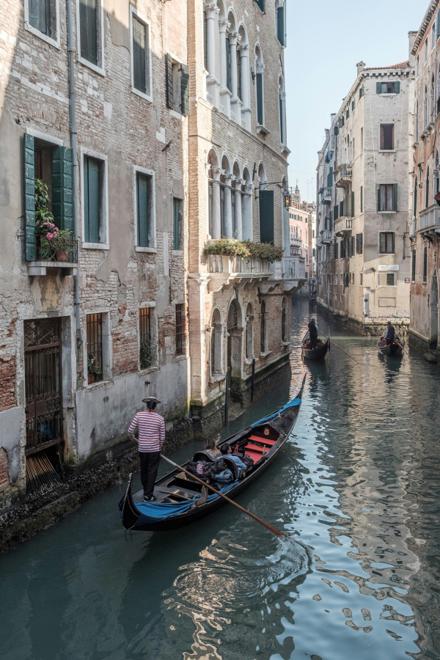
Take it into the rii, the back canals where the boats can barely pass, rather than the loop in front of San Marco. Start from a stand in San Polo or Cannaregio, and ask for no singing.
Boats, palazzi, museums and the lagoon islands. Prices and booking windows are on each card.
Piazzale Roma → San Marco · ~45 minutes
€9.50 and about forty-five minutes. The #1 is the slow boat: it stops at every palazzo, every bridge, every twist of the canal between the train station and San Marco. Board at Piazzale Roma or Ferrovia, stand at the back (the open-air section), and ride the full route around 6 p.m. Buy a 24-hour pass for €25 if you'll repeat it.
Avoid San Marco stands · try San Tomà or Santa Sofia
The price is fixed by the city: €90 for thirty minutes, €110 after 7 p.m. for six people. It is worth doing once, on the small inner canals where the boats can barely pass, not the chaotic loop in front of San Marco. Find a stand in San Polo (San Tomà) or Cannaregio (Santa Sofia traghetto). Ask the gondolier to take you into the rii (the narrow back canals) and avoid the singing add-on (€40 extra).
7 crossing points along the Grand Canal
Where there's no bridge, locals cross the Grand Canal standing up in a stripped-down gondola called a traghetto. Two euros, two minutes, and you're across, used mostly to skip a fifteen-minute walk to the nearest bridge. The Santa Sofia crossing (near Rialto Market) and the San Tomà crossing are still active most mornings. Cash only, exact change appreciated.
Fondamenta Bonlini · Dorsoduro
One of the few working squeri left in the city, where they still build and repair gondolas by hand using techniques unchanged since the 16th century. You can't go inside (it's a working workshop), but you can stand on the opposite bank of the Rio di San Trovaso and watch the masters at work. Each gondola takes about 500 hours to build, weighs 700 kg, and uses eight different types of wood. Best in the morning, weekdays.
Dorsoduro · facing Giudecca
The long, sunlit fondamenta on the south edge of Dorsoduro, facing the Giudecca canal, and wide enough to walk three abreast. Joggers, students, dog-walkers, gelato eaters from Nico's at the western end. The Punta della Dogana sits at the eastern tip. Walk the full length around 6 p.m. when the sun sets behind Giudecca's Redentore church. Sit at any of the floating café-pontoons for a Spritz with your feet over the water.
Campo del Ghetto Nuovo · Cannaregio
The word "ghetto" was established here on 29 March 1516: the Venetian Republic confined the Jewish community to this small island in Cannaregio, gated and locked at night. Five synagogues remain, and the museum tour is the only way to see the interiors. The square is quiet and residential. The bakery on the campo (Volpe) still makes traditional Venetian-Jewish pastries.
Boards Venice (San Marco) or Padua · Mar through Oct
A full-day boat down the Brenta canal, the 18th-century waterway that the Venetian nobility used to reach their summer estates inland. Nine swing bridges, five locks (true "water lifts" that raise the boat ten meters between Venice and Padua), and three guided villa stops: Villa Foscari "La Malcontenta," Villa Widmann, and the vast Villa Pisani at Stra. The pace is slow on purpose; the views are weeping willows and Palladian facades. Nine and a half hours, lunch optional and not included. Occasionally cancelled when the Brenta runs shallow; check the forecast.
Laguna Kayak · launches from Certosa or Sant'Erasmo
Paddling a sea kayak through the rio behind San Marco at 6:30 a.m. Laguna Kayak runs small-group tours through the canals, salt marshes and lagoon islands, including a route around the back of Murano and the abandoned plague island of Poveglia. Book the sunrise slot. Tide-dependent; they'll move your booking if the water's wrong.
Piazza San Marco · San Marco
The seat of the Venetian Republic for 700 years. Tintoretto's Paradise covers an entire wall of the Great Council Chamber. The Bridge of Sighs connects the palace to the old prison; Casanova was held in the cells beneath. Buy the Secret Itineraries tour (€32) if you can; it takes you through the prison, the torture chamber, and Casanova's actual cell. Otherwise the standard €30 ticket is plenty. Book the first slot at 9 a.m.
Piazza San Marco · San Marco
Gold-ground mosaics inside a Byzantine Greek-cross plan. The bronze horses in the upper loggia were looted from Constantinople in 1204; the originals are inside (the outdoor ones are copies). The Pala d'Oro, a gold and enamel altarpiece, costs €5 extra. Pre-book the €6 priority entry online or you'll queue an hour. No bags, no shoulders, no shorts.
Palazzo Venier dei Leoni · Dorsoduro
Peggy Guggenheim lived in this unfinished one-story palazzo on the Grand Canal from 1949 until her death in 1979. Her collection hangs in her actual rooms: Pollock, Picasso, Magritte, Ernst (her husband), Brancusi, Calder. Her terrace looks onto the canal, and Marini's bronze horseman points across the water. You are walking through her house, not a gallery built for the collection. Open Wednesday to Monday; closed Tuesdays. Sculpture garden in back where Peggy and her fourteen dogs are buried.
Campo della Carità · Dorsoduro
Bellini, Giorgione, Titian, Veronese, Tintoretto and Tiepolo, in the deconsecrated complex of Santa Maria della Carità. Veronese's vast Feast in the House of Levi was originally painted as a Last Supper before the Inquisition objected to the dwarfs and dogs. Two hours is enough. Free first Sunday of the month.
Punta della Dogana · Dorsoduro tip
François Pinault's contemporary collection inside the triangular 17th-century customs house at the very tip of Dorsoduro, where the Grand Canal meets the Giudecca canal. Tadao Ando renovated the interior in 2009: pristine concrete, original brick, very little signage. The exhibitions rotate; the building is the constant. From the steps at the tip: San Marco to the left, the Salute behind you, Giudecca opposite. Combined ticket with Palazzo Grassi.
Campo dei Frari · San Polo
The Franciscan basilica holding two Titian altarpieces: Titian's Assumption of the Virgin (1518) above the main altar, and his Pesaro Madonna in the left nave. Titian himself is buried inside. So is Canova, in his own pyramid tomb. Cold stone, brown brick, candle-smoke smell, and a Donatello wooden John the Baptist. Two Titians, a Donatello and two tombs for €5.
Campo San Beneto · San Marco
Mariano Fortuny y Madrazo, the Spanish-born painter, photographer, set designer, and fashion innovator who realised the pleated silk Delphos gown in 1909–10 from an idea by his wife Henriette Nigrin, lived and worked in this Gothic palazzo from 1898 until his death in 1949. The house was donated to Venice in 1956 by his widow Henriette and reopened as a permanent museum in March 2022 after extensive restoration from the 2019 acqua alta floods. The interior is hung exactly as Fortuny left it: his paintings, his lamps, his theatrical sets, the textile workshop where the Delphos was dyed, the photographic archive. Painterly, dim, intentionally moody; bring a phone with a good low-light camera. Closed Tuesdays. The piano nobile holds the main rooms.
10 min by vaporetto from Fondamente Nove
Glass has been made on Murano since 1291, when the Republic moved the furnaces off the main islands to reduce fire risk. The good furnaces are still here. The established showrooms (Venini, Seguso, Berengo) charge nothing to visit. Walk the Fondamenta dei Vetrai, eat lunch at Trattoria Busa alla Torre, and look for the Vetro Artistico Murano trademark on anything you buy.
45 min by vaporetto from Fondamente Nove
A fishing village where every house is painted a different brilliant colour, supposedly so fishermen could find their houses through the lagoon fog. Each colour requires permission from the local government, which keeps the palette honest. The Museo del Merletto covers the lace tradition and how to recognise handmade work. Lunch at Trattoria al Gatto Nero (book ahead) for the risotto di gò. Half a day, easy.
5 min by vaporetto from Burano
Settled long before Venice and largely abandoned by the 12th century: malaria, silting, then plague. The Cathedral of Santa Maria Assunta (founded 639) holds a Byzantine mosaic of the Last Judgement on its west wall that's as terrifying now as it was a thousand years ago. Take the bell tower for the view across to the Adriatic. The island is largely uninhabited. Twenty minutes from Burano on the vaporetto.
Connected to Burano by footbridge
Cross the wooden footbridge from Burano and you're on Mazzorbo. The Bisol family rescued the Dorona grape here in 2002, the indigenous Venetian variety nearly extinct after the 1966 flood, and now make a few thousand bottles a year in this walled vineyard. The Michelin-starred restaurant takes the lunch trade; the casual osteria takes the rest. Take the vineyard tour if you don't want a tasting menu.
Isola di San Giorgio · 5 min from San Marco
The island-monastery directly opposite San Marco, designed by Palladio in 1566. Climb the bell tower (lift, €8): the view faces back at San Marco, so the piazza and the Doge's Palace are in the frame rather than under your feet. The Tintoretto Last Supper inside the basilica is free. The Fondazione Cini takes the rest of the island and rotates contemporary shows, usually free. Five minutes on the #2 from Piazza San Marco.
Across the canal from Dorsoduro · #2 or #4.1
The long, low island across the Giudecca canal, historically the working-class side of Venice: shipyards, factories, the original Stucky flour mill (now a Hilton). Walk the fondamenta from west to east and Dorsoduro and San Marco sit across the water the whole way. Palladio's Il Redentore church anchors the middle. Stop at La Palanca for an affordable lunch on the water. The Belmond Cipriani occupies the eastern tip.
Vaporetto Line 13 · Fondamente Nove
Twenty minutes by vaporetto from Fondamente Nove lands you on a long, flat island where Venice grows its vegetables: castraure (the prized baby artichokes), the local Sant'Erasmo wine, herbs, garlic, asparagus, salad. The whole island is about ten kilometers around, flat, almost no cars, and most of it is farms with stone wells and abandoned watchtowers. Rent a bike at Lato Azzurro (the main inn near the vaporetto stop), pack a picnic from Rialto market the day before, and ride the perimeter in a slow loop. There's a small sandy beach at Punta della Vela on the lagoon side; bring a towel. Few services on the island. Best from April through October.
Mercato di Rialto · San Polo
The Rialto pescheria has stood on this spot since the Republic; the fishmongers' guild is documented from 1227. The fishmongers shout in Venetian dialect and break apart at 1 p.m. sharp. Closed Sundays and Mondays. The produce market alongside (Erberia) sells the rare lagoon vegetables: castraure (baby artichokes from Sant'Erasmo island), bruscandoli (wild hop shoots), radicchio di Treviso. Go at 7 a.m. for the spectacle.
Fondamenta della Misericordia · Cannaregio
The bar-walk. Start at Al Timon (boat seating on the canal), drift two doors down to Vino Vero (natural wine), back across to Paradiso Perduto for the late shift. The whole strip, about 600 metres, runs along the Fondamenta della Misericordia. Order a glass of Raboso and a few cicchetti at each stop. Best Thursday to Saturday from 6 p.m.
Piazza San Marco · 99 meters
There is a lift, and usually a queue. The view takes in the terracotta roofs and the lagoon. The bells still ring; wear earplugs if you go on the hour. Book the first slot at 9:30 a.m. and skip the worst of the line.
East of San Marco · all of eastern Castello
East of the Arsenale, Castello is residential: laundry between windows, kids in the campi. Walk from San Zaccaria east toward Via Garibaldi and the Giardini. There is nothing ticketed out here. Eat at El Refolo or Local. End at the Sant'Elena park, which is mostly trees and benches and residents.
Calle del Lovo 4813 · San Marco
A hat shop one minute from the Rialto bridge, run by the Longo family. The shop is the size of a closet, walls floor-to-ceiling with hand-blocked felts, woven straws, gondolier caps, fascinators, theatrical Carnival pieces. Pop in for the gondolier hat (the traditional bareteri, woven straw with double satin band) or a foldable Panama you can fit in a suitcase. Closed Sundays.
Calle degli Spezieri 381 · San Polo
A food speciality store open since 1948 on the calle that has housed Venetian spice merchants for six hundred years. The Mascari family (now run by Luciano's sons Gabriele and Gino) still trades the trade: 50 kinds of honey, sun-dried tomatoes from southern Italy, truffles, candied fruits, balsamic vinegars aged twenty years, and a separate wine room with 600+ Italian labels. Worth carrying home: the saffron, the dried porcini, the chestnut honey. Closed Sundays.
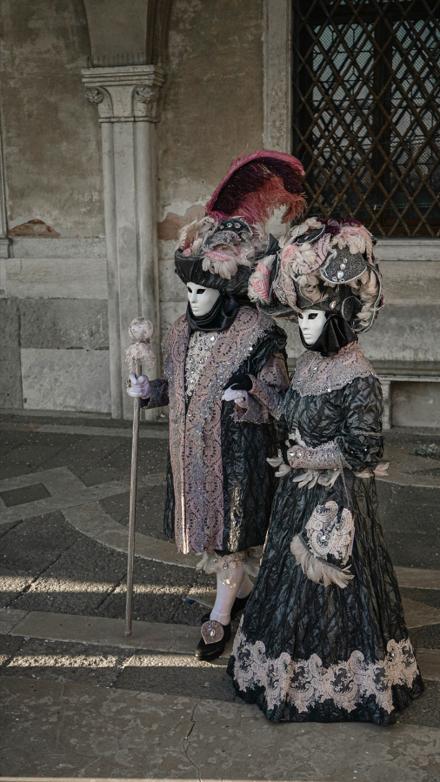
Late January into February, and it runs on its own calendar rather than the city’s usual one, the way the Biennale does. Check the dates before you book rather than after.
Base in Cannaregio or Dorsoduro. One day in the back canals, one day in Dorsoduro and the south, one day in the lagoon. San Marco before 9 a.m. or after 7 p.m.
Rio Terà Lista di Spagna · Cannaregio
A two-minute walk from Santa Lucia station. Stand at the bar (sitting doubles the price) and order a krapfen, an espresso, and one of the small fruit tarts. €4 covers it.
Campo del Ghetto Nuovo · Cannaregio
A ten-minute walk from Dal Mas. The Museo Ebraico runs guided synagogue tours on the hour. Book the 10 a.m. slot. You'll see three of the five remaining synagogues, hear how the word "ghetto" came from the Venetian for foundry (this was the old copper foundry district before the Republic walled the Jewish community in here in 1516). Buy Volpe's pastries before you leave.
Calle Arco · San Polo · 8 min from Rialto
A 15-minute walk south through Cannaregio and across the Rialto Bridge. Father and son Pinto: Francesco took over in 1996, Matteo joined later. Stand at the counter, order two or three cicchetti (the baccalà mantecato, the tuna with leek, the moeche when in season), a small glass of Raboso, and watch lunch happen around you. They close at 2:30 sharp.
Campo dei Frari · San Polo
Two rooms of Venetian art, two minutes apart. The Frari for Titian's Assumption (1518), his own tomb, and Canova's pyramid. Across the campo, the Scuola Grande di San Rocco is wall-to-ceiling Tintoretto. He spent 24 years painting this single building. The mirrors on the floor are so you can study the ceilings without breaking your neck.
Fondamenta della Misericordia · Cannaregio
Back across the canal to your neighborhood. Start at Al Timon and get a boat seat if one's free. One Spritz Select, two cicchetti, then drift 30 meters east to Vino Vero for a glass of something natural. The strip is six bars long. You don't need to make all of them. Order a Select Spritz rather than an Aperol; Select is the Venetian one, made in Castello since 1920.
Fondamenta della Sensa · Cannaregio · 10 min walk
A short walk from the Misericordia strip, on a quieter fondamenta. Twenty seats. The kitchen runs on what came off the boat that morning: sarde in saor done correctly, branzino baked in salt, gnocchi with crab. Book three weeks ahead. Sit outside if the weather holds.
Calle San Pantalon · Dorsoduro
The university pastry shop, Tonolo, on Calle San Pantalon. The krapfen is a Carnival pastry they have stretched into a year-round staple. Order one filled with zabaione cream, one cappuccino, and stand at the marble counter. Closed Mondays.
Campo della Carità · Dorsoduro
Bellini's Madonnas, Giorgione's Tempest, Titian, Veronese's Feast in the House of Levi (originally a Last Supper before the Inquisition objected to the dwarfs and dogs). Two hours is enough. Free on the first Sunday of the month, so avoid that day. Book the 9:30 slot online.
Fondamenta Nani · Dorsoduro · 5 min from Accademia
Three minutes from the Accademia, on a small canal opposite the Squero di San Trovaso gondola yard. The Gastaldis run it. The tuna-with-cocoa crostino is the famous one but the counter runs to 30 hand-made varieties a day. Take your plate and ombra outside to the canal wall. Cash only. Closed Sundays.
Palazzo Venier dei Leoni · Dorsoduro
Peggy lived in this unfinished one-story palazzo on the Grand Canal until she died in 1979. Her collection — Pollock, Picasso, Magritte, Brancusi, Calder, Ernst (her husband for a while) — hangs in her actual rooms. Marini's bronze horseman points across the canal, anatomically correct. Her rooms, her furniture, her dogs buried in the garden. Walk the terrace, sit a while.
Fondamenta Zattere · Dorsoduro
The long sun-lit promenade facing Giudecca, a rare stretch of wide, straight pavement in a city of alleys. Stop at Nico for a Gianduiotto, gianduia gelato drowned in whipped cream. Walk east to the tip of Dorsoduro, where the Grand Canal meets the Giudecca canal at Punta della Dogana. Sit on the steps.
San Polo · "no pizza no lasagna"
There's a sign outside that reads "no pizza no lasagna no tourist menu." The Bortoluzzi family runs it. Order the moeche in spring or fall (soft-shell crab from the lagoon, available about six weeks of the year), the spider crab, the cuttlefish in its own ink over polenta. Book a month ahead.
From Fondamente Nove · 45 min crossing
Walk to the Fondamente Nove stop on the north side of Cannaregio. Catch the 8:40 or 9:10 #12 toward Burano. Forty-five minutes across the open lagoon. Sit on the right for the views of San Michele cemetery island and Murano. Get the day-pass (€25, 24 hours) if you'll repeat. Coffee at the bar on board.
Burano village · then footbridge to Mazzorbo
Walk the painted streets: twenty minutes does it, an hour if you stop. The Museo del Merletto explains what real Burano lace looks like (most of what's sold on the street is imported). Cross the wooden footbridge to Mazzorbo for the Venissa walled vineyard, where they grow Dorona, the indigenous grape that nearly died in 1966.
Mazzorbo · the casual side of Venissa
The Michelin-starred restaurant takes lunch reservations months out and costs €180. The osteria next door — same kitchen, same vegetables from the walled garden, less ceremony — does a three-course lunch for around €55. Book a table on the terrace overlooking the vineyard. Glass of Dorona, then the lagoon fish, then a coffee. Boat back at your pace.
5 min vaporetto from Burano
Settled long before Venice. The Cathedral of Santa Maria Assunta (639 AD) holds a Byzantine mosaic of the Last Judgement on its west wall that's still genuinely terrifying. The bell tower gives you the lagoon from above. The island is largely uninhabited and very quiet. An hour and a half does it.
Calle Vallaresso · San Marco
Back to San Marco. The bar Giuseppe Cipriani opened in 1931, where he invented the Bellini in 1948 (white peach purée and Prosecco). Yes it costs €25. Yes it's worth it once. The ground floor only, never the upstairs restaurant. No photos. No jeans.
Piazza San Marco · after 9 p.m.
Walk five minutes from Harry's. After 9 p.m. the piazza is almost empty, the basilica lit from below, the orchestras at Florian and Quadri playing competing waltzes across the square. Sit on the steps at Caffè Lavena, or pay for a coffee at Florian's terrace (€16 with the orchestra surcharge).
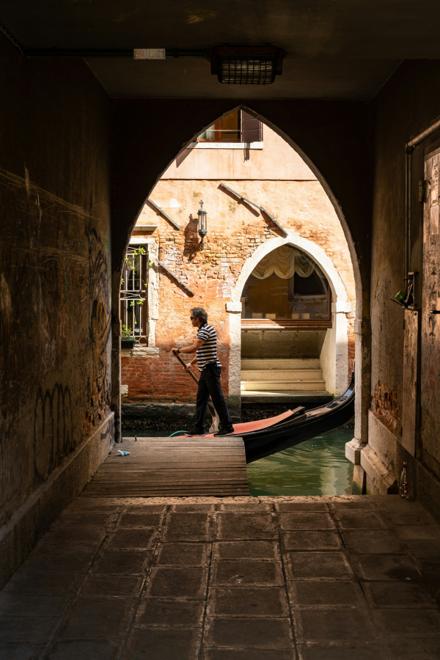
Seven points along the Grand Canal where a gondola takes you straight across for €2. It is the local way over, and the cheapest time you will ever spend in one.
Cucina veneziana: lagoon cooking with a long memory for the Levant trade routes. The fish comes off the Rialto market, the rice from the Veneto plain.
Most of what fills a Venetian glass comes from the hills an hour north.
Select and AperolDistilled in Castello a century ago. Darker and more bitter, with rhubarb and juniper on the bite.
Sweeter and more orange-forward, at half the alcohol.
3 parts Prosecco · 2 parts Select (or Cynar, or Campari) · 1 part soda water. A green olive on a skewer, no orange. Served in a wine glass, not a balloon. €4 at a bacaro, €18 at a hotel terrace.
The six wines you'll actually be poured. Lightest to heaviest, white to red.
The good one: UNESCO-protected DOCG, drier and more mineral than the supermarket DOC. Cartizze is the single-village micro-cru on top.
With cicchetti, before everything else
The default ombra-bianca. Look for Soave Classico DOCG from Pieropan or Inama: almonds, white peach, a salt finish. Skip the cheap stuff.
With baccalà mantecato, sarde in saor
The light Veneto red: sour cherry, bitter almond. Classico is everyday; Ripasso is the half-step-up; Amarone is the older brother.
With pasta, grilled fish, roasted vegetables
Two thousand years old; the Romans drank it. Plum, black pepper, a wild herbal edge. On the good wine lists at Estro and Wistèria.
With radicchio, venison, aged cheeses
A nearly-lost Venetian grape, fiercely tannic and high-acid. Ask for it by name.
With duck, local salumi, the long dinner
The monumental Veneto red. Grapes dried on bamboo racks for four months before fermentation: fig, leather, tobacco, a finish that holds half a minute. €60–250 a bottle.
With the cuttlefish, the lamb, the cheese
Practical things: timing, the access fee, boats, addresses.
Go in April, May, late September or October for mild walking weather and fewer summer crowds. June and early September are warmer and busier; July and August bring the most heat. Autumn and winter carry more acqua alta risk. Check Carnival and Biennale dates before booking.
Acqua alta is most likely in autumn and winter, and San Marco is among the first areas to flood. Sirens warn of higher tides, while raised walkways cover key routes. Check the city's tide forecast before heading out and pack waterproof shoes.
Venice's 2026 access-fee period ended on July 26, so no payment or registration is currently required. The scheme may return with new dates and rules. Before a day trip, check cda.ve.it; when the fee applies, overnight guests are exempt from payment but may still need proof of exemption.
A vaporetto costs €9.50 per ride. Passes are €25 for 24 hours, €35 for 48 and €45 for 72, so the one-day pass makes sense from the third ride. Gondolas cost €90 for 30 minutes by day or €110 for 35 minutes after 7 p.m., for up to five people.
See Piazza San Marco before 9 a.m. or after 7 p.m. Book the basilica, Doge's Palace and Campanile for the earliest available slot; the middle of the day is busiest. Return after dinner for the square and its orchestras without the daytime crush.
Venice numbers buildings by sestiere, not by street, so a house number alone is nearly useless. Save the full address and a map pin, then navigate by campos, churches, bridges and the yellow signs for San Marco or Rialto. Expect the occasional wrong turn.
A Venetian spritz combines Prosecco, soda and a bitter. Aperol is sweeter and orange-forward; Select, created in Venice in 1920, is darker and more bitter. Cynar is the herbal option. Start with Select in Venice, then decide which one you prefer.
Look for the Vetro Artistico® Murano mark: a numbered anti-counterfeit label used by licensed producers. Buy from a listed maker or established shop, ask who produced the piece and keep the receipt. A generic “Murano” sticker is not proof that the glass was made on the island.
Four events that completely change the city. Tap one to open it.
$85, one time.
Tell us you're going to Venice. When, for how long, which sestiere suits you, whether you want a hotel on the Grand Canal or a quiet apartment in Cannaregio, whether you care more about the art or the cicchetti. We send back a custom itinerary in 72 hours: restaurants, hotels, day-by-day flow, the boats. Two revision rounds included until it's right.
Commission an itinerary →Delivered within 72 hours · Two revision rounds included


