Greece
Six regions. Two seas. A thousand islands. Pick a few, do them right.
Last reviewed July 2026
Euros, with cash for the islands and the tavernas. Come late May–June, or September–October. English is widely spoken. Hop by ferry. Below: six regions, our picks.
Most people come for the beach. The argument is everything else.
Athens usually gets one night before the ferry, and then a week goes to two islands picked from photographs. Athens is worth three days on its own, and the islands are far less interchangeable than the pictures make them look.
The Greek islands fall into clusters, like the Cyclades and the Dodecanese, and the boats mostly run between islands inside the same cluster. That decides more about your trip than anything else, so pick one cluster, choose two islands in it, and give each of them a few days.
This guide covers six regions. We've vetted all of them.
Go in shoulder season, eat lunch late, and don't plan the ferries too tight.
August is the busiest month. Athens empties onto the islands, room rates double, and the meltemi can cancel ferries for a day at a time. If August is the only month you can travel, book rooms and boats well ahead and stay on one island instead of hopping between them. Otherwise, go in late May, June or September.
Two islands, not five. Picking a base and taking day boats beats packing a suitcase every other morning. The ferries eat more hours than people budget for.
Lunch is at 2:30 and dinner is at 9:30. Showing up at 7 means eating with other tourists, so shift your whole day later.
Carry cash on the small islands. Cards are everywhere on Santorini, Mykonos, Crete, Rhodes. Less so on Folegandros, Patmos, the back streets of anywhere. Pull euros in Athens.
Buy the Acropolis combo ticket. €30 gets you the Acropolis plus six other archaeological sites in Athens over five days. Buy online, skip the line, go at opening.
Plug type C/F. Same as the rest of continental Europe. Two round pins. Bring one adapter.
Tipping is light. Round up, leave a couple of euros on the table for a long lunch. Service is rarely included; 5–10% is generous.
Ferries connect islands in the same cluster. The Greek islands fall into clusters, mainly the Cyclades, the Dodecanese and the Ionian, and boats run all day between the islands inside one of them. There is very little going directly from one cluster to another, so crossing between them usually means a flight. Blue Star and Hellenic Seaways run the ferries, and Aegean Airlines does the cheap island-to-island hops.
Athens is open all year. So is Crete, mostly. The Cyclades shut down in winter; most tavernas close from November to April.
Greek breakfast is light. A coffee, a koulouri from a street cart, maybe a yogurt. Lunch is the meal that matters.
Spring
This is the best time to go.
Summer
It gets busy, so book ahead.
Autumn
It is often better than spring.
Winter
Stick to Athens and Crete.
Pick your region.
Each region gets its own guide: where to eat, sleep, and spend the days.
The Cyclades
Santorini, Mykonos, Paros, Naxos, Milos, Folegandros, Sifnos. The chain everyone thinks of as Greece, and the ones to pick over the famous two.
Athens & the Riviera
Plaka, Koukaki, Kolonaki, Kifissia, and a Riviera at Vouliagmeni and Glyfada that's become its own scene. Three days minimum.
Crete
Chania, Heraklion, Rethymno, the Lasithi plateau, Elafonissi. The most serious food on any Greek island, and a landscape that runs from white sand to alpine in an hour.
The Peloponnese
Nafplio, Monemvasia, the Mani, Olympia, Mystras, the Messinian olive country. The mainland that most Greece itineraries skip, and the one that tends to make the trip.
The Ionian Islands
Corfu, Paxos, Kefalonia, Zakynthos, Ithaca, Lefkada. A softer, greener Greece on the Italian side: Venetian fortresses, cypress groves, water that does not look real in photos.
The Dodecanese
Rhodes, Kos, Patmos, Symi, Kastellorizo. The chain hugging the Turkish coast: Crusader walls, a monastery John of Patmos lived in, and an island (Symi) usually seen only from a day boat.
Where We Eat
The tavernas a cab ride out, the seafood place at the end of the dock, where to spend on a tasting menu, and the bakery worth getting up for.
Explore →Where We Sleep
From the converted Mani tower house to the Cycladic cave suite worth every euro. Organized by price, vetted on site.
Explore →What We Do
Ruins worth the heat, sails worth the day, the right hammam in the right city. What actually earns your hours on the ground.
Explore →The ones we'd send a friend to first
Not comprehensive. Not ranked. A handful of places across Greece that would carry the trip on their own. The full guides go deeper. These are the ones we'd start with.
Dinner at Selene
The serious Santorini restaurant, in the village above the caldera tourists never bother climbing to. Modern Greek tasting, ingredients from the island, a wine list that takes Assyrtiko as seriously as anywhere on earth. Book a month out in summer.
Hytra at the Onassis Cultural Centre
Sixth-floor rooftop, Acropolis lit up on the horizon, one of the few Michelin-starred kitchens in the city working on Greek terms instead of French ones. Go for the tasting. Sit on the terrace if the meltemi cooperates.
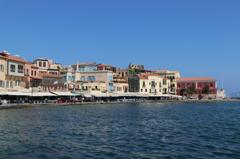
An evening on the old harbor
Venetian arsenals, a 14th-century lighthouse, fishing boats still working. Eat at one of the back-street places off the waterfront, not on it; the harbor view costs the food. Walk it after dark when the day crowd thins.
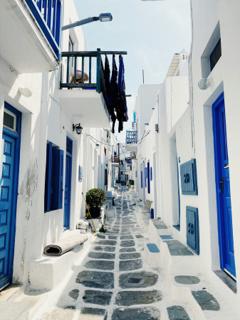
A night, not a day, on Symi
The Rhodes day boat gives you two hours on Symi, enough for fried shrimp and little else. Stay overnight in Yialos instead. The town empties at 6 p.m., the harbor turns gold, and you have one of the prettiest ports in Greece to yourself.
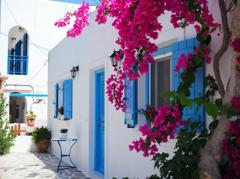
Lunch in Chora
The Cyclades without the cruise ships. A village built on a clifftop with three squares of bougainvillea, a handful of tavernas, and a sunset walk to the Panagia church above the town. Two nights, minimum. Bring cash.
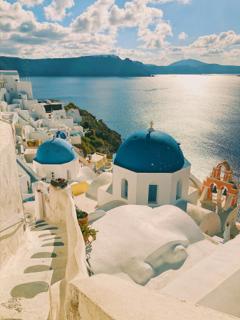
A weekend at Amanzoe
An Aman built like a hilltop acropolis above the Argolic Gulf: pavilions, private pools, a beach club ten minutes down the road. The reason to fly into Athens, drive two hours, and skip the islands entirely.
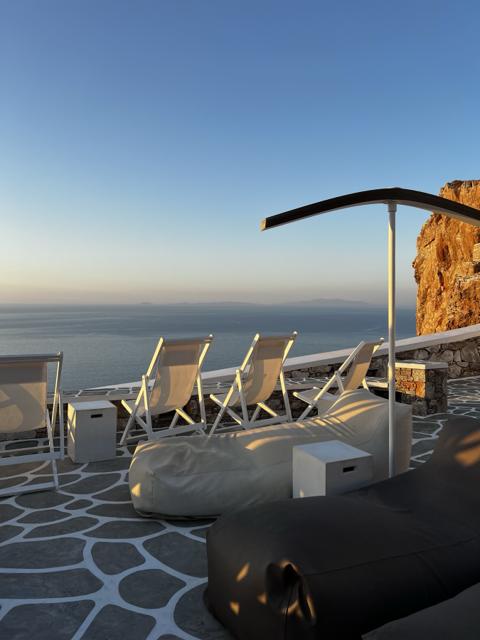
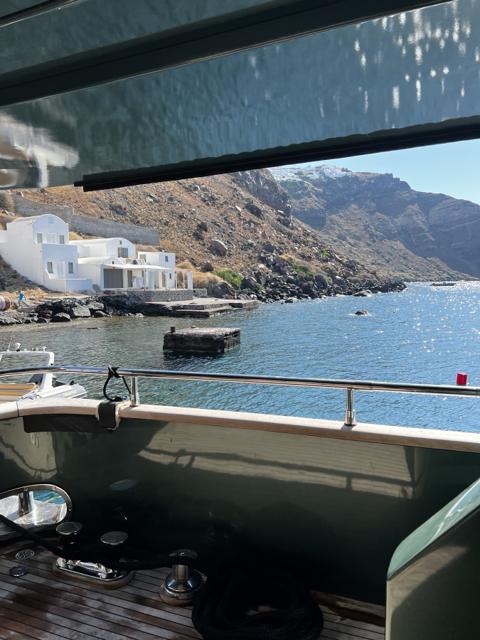
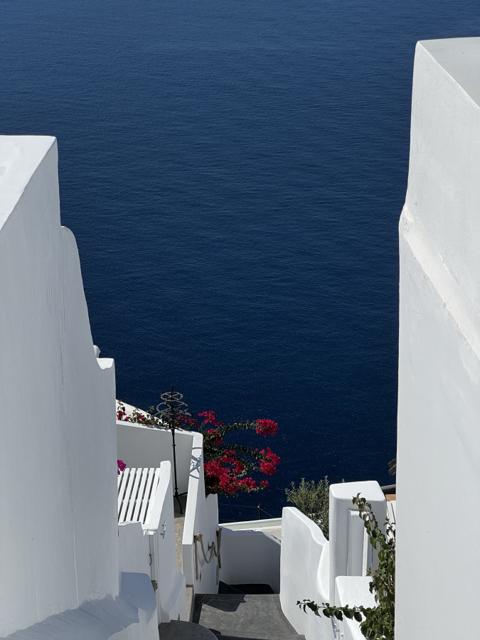
Greece, in three moves
Athens, three days
Acropolis at opening
Buy the combo ticket online. Go in through the south slope entrance. Forty-five minutes before the buses arrive.
Acropolis Museum
Across the road. The Parthenon Gallery on the top floor is the argument for sending the marbles back.
Lunch in Plaka — Diporto or Karamanlidika
Diporto is a basement, no menu, what the cook decided that morning. Karamanlidika is cured meats and a wine list.
Walk Koukaki and Pangrati
The two neighborhoods worth wandering. Koukaki for the bars under the Acropolis, Pangrati for the local cafés.
Dinner at Hytra
Sixth-floor terrace, Acropolis on the horizon. Book a week ahead.
A late drink at The Clumsies
One of the best bars in Europe. Order off-menu and let them decide.
A Cycladic base, four days
Blue Star ferry — Piraeus → Naxos or Paros
Five hours, Business class is fine. The fast cat is faster but rougher; skip it if the meltemi is up.
Lunch at a port-side taverna
Grilled fish by the kilo, horiatiki, tzatziki. Order house wine in a copper jug.
Walk the chora
Get lost in the white streets above the harbor. Don't follow Google Maps.
Rent a small boat or join a day sail
This is the good part. The Small Cyclades — Koufonisia, Iraklia, Schinoussa — are an hour off, no cars, no crowds.
Beach, swim, lunch, sleep
This is the part most travelers skip and then regret, so give it the time.
Dinner at a hill taverna
Drive inland fifteen minutes. The food is better and half the price.
Crete, three days
Aegean Airlines — Naxos or Paros → Heraklion
Forty-five minutes. Pick up the rental at HER and drive west.
Lunch at a Rethymno mountain village
Look for slow-cooked goat, stuffed zucchini flowers, the local raki at the end. Don't refuse it.
Arrive Chania
Base for the next two nights. Stay inside the old town walls, not at a resort.
Dinner off the harbor
Skip the waterfront menus in three languages. Walk two streets back.
Elafonissi or the Samaria gorge
The pink-sand beach if you want soft, the gorge if you want to earn the lunch after.
The Lasithi plateau or a winery day
Inland Crete gets skipped, and it's the best argument for a second trip.
We can take it from here.
Tell us where you're going, how you like to travel, and what your budget looks like. We'll send back something worth packing for.