Destinations Greece The Cyclades Santorini Wine
The Cyclades · Santorini

Santorini wine

A hand-drawn illustration of a Santorini kouloura — the coiled, basket-trained vine
07
Producers
03
Native grapes
03
Bottles home

Santorini's wine is the trip people don't realise they came for. Volcanic pumice instead of soil; vines coiled low in basket-shaped kouloura against the meltemi; a native white (Assyrtiko) the wine world has only just discovered, and a Vinsanto the island made centuries before the Tuscan one. Three grapes to understand, seven producers worth the drive, one day that's the entire reason to leave Oia.

Last reviewed July 2026

The whites are Assyrtiko, Aidani, Athiri; the reds, Mavrotragano and Mandilaria; and the Vinsanto is the one to try. The vines are basket-trained. Tastings run €15–45 a flight, bottles €18–80 (Vinsanto €40–200). Go April–May or September–October, and skip the cruise hours and the noon heat.

A note from Hala

Santorini's wine is the part of the island most travellers spend three days within a kilometre of and never visit. Volcanic pumice for soil. Vines so old (60–100+ years on the average estate) they survived phylloxera. A grape — Assyrtiko — the wine world has only known what to do with for about a decade. And Vinsanto, a dessert wine the island has been making since centuries before the Tuscan version copied the name. Seven wine-first tasting rooms; four worth a full visit.

One day is enough. Book mornings (cruise crowds arrive at the cliff-side rooms by 1 p.m.). Drive yourself or hire a driver; the wineries are spread between Oia, Pyrgos, Megalochori, and Episkopi, and the bus doesn't work. Bring two bottles home; the customs limit is generous and the wine is markedly better at the source.

Two wineries is a full afternoon, and lunch in a wine village rather than on the cliff.
Quick take

Most wineries take walk-ins for tastings (€15–25 a flight) but the top estates (Sigalas private tour, Hatzidakis cellar visit, Estate Argyros library tasting) need a few days' notice. Book direct on the producer's website; the third-party tour-aggregators add €30+ per head with no benefit. Most tasting rooms close by 7 p.m. Vinsanto from the older vintages (10+ years) is the rare bottle worth shipping; everything else fits in checked luggage.

Know before you go

The grapes

Five native varieties define Santorinian wine: three whites (one famous), two reds (one nearly lost), and the blend that becomes Vinsanto. The vines are basket-trained low to the ground in a coil called a kouloura, protection against the meltemi wind, with the grapes hanging inside the basket. Many are 60–100+ years old, ungrafted (Santorini's pumice repels phylloxera), and yield tiny amounts per vine, which is why the bottles are not cheap.

Assyrtiko

The headline white · high acid · saline · indigenous

Native to Santorini, almost lost to phylloxera elsewhere: high-acid, bone-dry, mineral, almost saline on the finish, like a Chablis with the volume turned up. Drinks beautifully with fava, with octopus, with sea-urchin pasta, and (the test) with white asparagus. Most of what the good producers bottle is single-vineyard Assyrtiko. If you order one Santorini wine, order this.

PDO SantoriniBone-drySaline finish

Aidani

Aromatic white · used in Vinsanto · single-varietal rarer

A more aromatic white, traditionally a Vinsanto blending grape (alongside Assyrtiko and Athiri). Single-varietal Aidani is a recent revival; Sigalas was the first to bottle it solo, in 1991. Softer, more floral, lower acid than Assyrtiko. Worth tasting once for comparison, the table wine to put alongside an Assyrtiko in a flight.

Vinsanto blendFloralRevival varietal

Athiri

The third Vinsanto white · less seen alone

The third grape in the traditional Vinsanto blend: softer than Aidani, lighter than Assyrtiko, mostly used for blending. A few producers (Estate Argyros, Hatzidakis) bottle small Athiri-led whites; treat them as table wines for warm-weather lunches. Pair with grilled fish and citrus dressings.

BlenderSoftLunch wine

Mavrotragano

The native red · revived in the 1990s · the cult bottle

A native red almost extinct by the 1980s; Paris Sigalas led the revival in the 1990s, and it's now the most-talked-about Santorinian red. Smoky, structured, mineral, drinks more like a Northern Rhône syrah than a Mediterranean grape. The single most collectible Santorini wine. Sigalas, Hatzidakis, Vassaltis, and Argyros all bottle it.

Cult redRevived 1990sCellar 10+ years

Vinsanto (the wine)

Dessert wine · sun-dried grapes · oak-aged minimum 2 years

Not the Tuscan one. Greek Vinsanto pre-dates the Italian version by centuries. Assyrtiko (with small amounts of Aidani and Athiri) is harvested and sun-dried for two weeks before pressing, then aged in oak for a minimum of two years, often ten or more. Amber, viscous, honey-and-fig on the nose, salt on the finish. Order a glass after dinner with walnuts and feta; skip dessert. The bottle worth shipping home.

PDO Santorini10+ years cellar€40–200 per bottle
Where We Taste

The producers

Seven verified Santorini producers: five wine-first tasting rooms where the wine comes first, plus two cliff-side cooperatives where the view is. Visit the wine ones first; do the cliff ones for the sunset glass with an open mind about the wine.

The five worth a full visit

Small producers, real tasting rooms, and it's about the bottle. Book a few days ahead; €15–45 for a flight.

Domaine Sigalas

€€€
Must tasteKavalieros single-vineyard Assyrtiko

Paris Sigalas's flagship estate in the Oia hinterland: founded 1991, a member of the Santorini PDO board, and the most name-checked Assyrtiko producer on the island. The garden tasting room is open daily (€25–45 flights); the private cellar tour (€80, by appointment) is the upgrade if you can swing it. Sigalas led the Mavrotragano revival in the 1990s; the single-vineyard Kavalieros Assyrtiko is the bottle most somms call the reference. Pair with lunch at the estate restaurant.

The artisan benchmarkOia hinterlandEstate restaurant
sigalaswinery.com

Estate Argyros

€€€
Must tasteCuvée Monsignori Vinsanto (20-year)

The oldest continuously-operating family producer on Santorini: Yiorgos Argyros's great-grandfather Matthaios planted the first vines in Episkopi Gonias in 1903. Four generations later, Matthew Argyros runs the estate, and the cellar holds Vinsanto stocks going back to the 1960s. The library tasting (€60, by appointment) walks through the oldest bottles; the standard tasting (€30) covers the current vintages. The Cuvée Monsignori Vinsanto is the bottle Santorini sommeliers point to.

Family since 1903Episkopi GoniasLibrary Vinsanto tasting
estateargyros.com

Hatzidakis Winery

€€€
Must tasteSkytali Assyrtiko (single-vineyard, biodynamic)

An underground cave cellar in Pyrgos Kallistis: founded by Haridimos Hatzidakis in 1996, certified biodynamic, now run by his widow Konstantina and son Nikos after Haridimos's passing in 2017. The flagship Skytali single-vineyard Assyrtiko is the most-mineral expression on the island. Smaller production than Sigalas or Argyros (around 60,000 bottles annually); the tasting (€20–30) is in the cave itself. Book a week ahead in season; the room only holds 12.

BiodynamicPyrgos KallistisCave cellar · book ahead
hatzidakiswines.gr

Gai'a Wines

€€€
Must tasteThalassitis Submerged (Assyrtiko aged underwater)

A modern Santorinian winery in a former tomato-canning factory on the black sand of Exo Gonia: founded 1994 by Yiannis Paraskevopoulos and Leon Karatsalos (who also run a separate Nemea producer on the mainland). The Thalassitis Submerged Assyrtiko is the conversation piece: bottles aged for five years in cages on the sea floor at 25 m depth, then surfaced. The standard tasting (€20) is excellent; the submerged-wine experience runs around €100 and is worth doing once.

Submerged-aged AssyrtikoExo Gonia · seafrontFormer canning factory
gaiawines.gr

Estate Vassaltis

€€
Must tastePlethora — old-vine Assyrtiko

The newest producer worth visiting: opened 2017 in Vourvoulos by the Valambous family, with a tasting room designed as an architectural statement on its own (white concrete, indoor-outdoor, a sunset view across the vines). Younger estate, modern winemaking, accessible price points (€25 for the flight). The Plethora old-vine Assyrtiko is the bottle to buy; the Nassitis cuvée and the Aidani are the other tastes worth doing.

Vourvoulos · opened 2017Architectural tasting roomSunset visit
vassaltis.com

The two cliff-side tasting rooms

Larger producers, walk-in friendly, the views are extraordinary, the wine is good-not-great. Do them for the sunset; don't make them the only tastings.

Santo Wines

€€
Must tasteGrande Reserve Assyrtiko + Vinsanto

The Union of Santorini Cooperatives, the largest producer on the island, drawing fruit from over 1,200 grower-members. The cliff-side tasting terrace on the road from Fira to Pyrgos has the most-photographed caldera view on Santorini outside the Oia sunset rocks. The standard flights (€15–25) are honest; the Grande Reserve Assyrtiko and the Vinsanto are the bottles worth focusing on. Walk-in friendly. Touristy, and doesn't pretend not to be. Book a late-afternoon table to catch the sunset.

Cliff-side caldera viewWalk-in friendlySunset booking
santowines.gr

Venetsanos Winery

€€
Must tasteflight on the caldera-edge terrace

The first industrial winery built on Santorini (1947): a multi-level cave cellar dug into the cliff above the old Athinios port, gravity-fed winemaking, a sun-deck terrace cantilevered out over the caldera. The Venetsanos family ran it until 2004; the family's third generation restored and reopened it in 2014. The wine is solid (the Assyrtiko and Nykteri are the orders); the architecture and the view are why you come. Book a sundown flight.

Caldera-edge terraceBuilt 1947 · restored 2014Sundown booking
venetsanoswinery.com
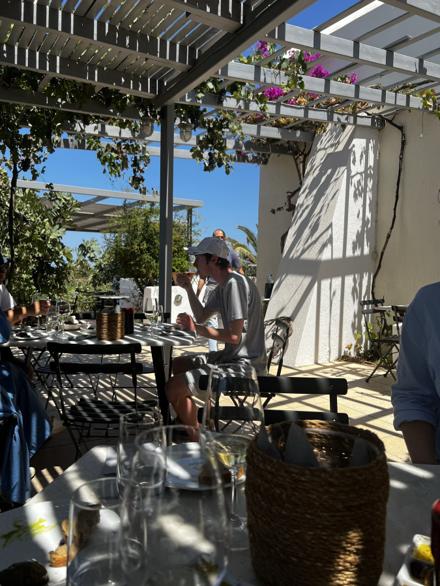
Wine glasses and a table in the dappled shade of a pergola, Santorini
Out of the sun

A tasting under the vines in Santorini.

Photography: Sofia Scarselli
Three bottles

What to bring home

The bottles to look for at producer tasting rooms, not at the airport, not at duty-free, not at the hotel gift shop. All three travel safely in checked luggage; the Vinsanto is the rare bottle worth shipping if you're picking up multiple.

Worth knowing

A few things

The mechanics that turn a Santorini wine day from a queue at a cliff-side cooperative into the trip people send back referrals for.

On booking

Book direct on the winery's website; the third-party tour aggregators (GetYourGuide, Viator) add €30+ per head with no benefit and worse availability. Sigalas's private cellar tour, Argyros's library tasting, and Hatzidakis's cave visit all need a few days' notice; the standard daytime flights at all seven are usually walk-in friendly, but reserving a table is free and saves the wait.

On the harvest

Late July through mid-August is the Assyrtiko harvest, the earliest in Europe, driven by the heat. Vinsanto grapes are then sun-dried for two weeks before pressing in mid-September. If you're on the island during harvest, a few estates (Sigalas, Vassaltis) let visitors walk the vineyards at sunrise; ask in advance.

On bringing bottles home

EU residents: no customs limit; bring as many as you can fit in checked luggage. US travellers: federal limit is 1 litre duty-free, anything more is technically dutiable (rarely enforced for personal-use quantities under a case). Wrap bottles in clothes inside checked bags, or buy a padded wine sleeve at any decent estate shop for €10. Don't put wine in carry-on under 100ml liquid rules.

On the cliff-side cooperatives

Santo Wines and Venetsanos are where the cruise crowds and the bus tours go; both are honest businesses with respectable wine, but the rooms are loud and the focus is volume. Do them at sunset (golden hour, the caldera at its best) and treat them as bars-with-a-view, not the day's main tastings. The top producers (Sigalas, Argyros, Hatzidakis) are where the wine itself is the draw.

On hiring a driver

€180–260 for a full wine day with a private driver (ask the hotel concierge; book direct with a local outfit like Santorini Plus or Sun & Spirit Tours, not a packaged tour). Splitting four ways works out to €50 a head, cheaper than rental plus parking, and you don't have to drive after tasting. Tips are €20–40 on top.

On the Greek wine scene beyond Santorini

If Santorini Assyrtiko is the gateway, the next stops are Tinos (T-Oinos in Falatados, the best Cycladic producer outside Santorini), Nemea in the Peloponnese (the Agiorgitiko red, and Gai'a's mainland estate is a benchmark), and Naoussa in Macedonia (Xinomavro, the Greek Nebbiolo). The best Athens wine bars (Heteroclito, Materia Prima) carry a smart cross-section.

More Greece The rest of the country, in any order.
Upon Request

Want it built around you?

Tell us when you're going to Santorini and we'll build the wine day around your trip: driver bookings, winery reservations, the right lunch slotted in, the bottles to ship home. Custom itinerary in 72 hours. two revision rounds included until it's right.

$85, one time.

Build my Santorini wine day

Delivered in 72 hours · two revision rounds included