
Thailand
Two coasts that take their rain in different months, and a capital most people treat as a layover. Which coast you pick depends on when you are going.
Thai baht, and cash for markets, street food and songthaews. Most Western passports now get 30 days visa-free. File the digital arrival card before you fly. The beach season depends on which coast you pick. Below: four regions, our picks.
Nobody plans Thailand wrong on the map. They plan it wrong on the calendar.
The country has two monsoons running on opposite schedules. The Andaman side, which is Phuket and Krabi and the limestone islands, is dry from about November through April and takes the southwest monsoon from May to October, worst in September. The Gulf side, which is Samui and Phangan and Tao, sits out of that wind and gets its own rain later, October into January, with November the wettest month by a distance.
So a September honeymoon on Phuket is a week of red flags and cancelled boats, and the same week on Koh Samui is fine. The choice between the two coasts is a calendar decision before it is a taste one, and it is the single thing worth getting right first.
The rest follows the same logic. Bangkok is open all year and is worth more than the two nights it gets on either side of a beach. The north is cooler, cooks differently, and is an overnight train or a short flight away. This guide covers four regions, which is all Thailand currently sustains at our bar.
Pick the coast that matches your month, then book the rest around it.
The two coasts have opposite seasons. The Andaman coast runs dry roughly November to April and wet May to October, peaking in September. The Gulf islands are the reverse, wettest October into January and worst in November. There is a good beach somewhere in Thailand in almost any month, but it is rarely both of them at once.
Thirty days, not sixty. Thailand cut the visa exemption from 60 days to 30 on 15 September 2026, and trimmed the list of eligible passports. Most Western ones are still on it. Thirty days can be extended once, in-country, for a fee at an immigration office. If your trip runs longer than a month, sort the visa before you fly rather than at the border.
File the arrival card first. The paper form is gone. Every foreign arrival by air, land or sea now files the Thailand Digital Arrival Card online in the three days before landing, children included, one card per person per entry. It is free at tdac.immigration.go.th, which is the only site to use; the ones charging for it are resellers. It is not a visa and does not replace one.
Give Bangkok four nights. Two nights on arrival and one on the way out is the standard shape, and it is the reason people come home thinking Bangkok is an airport with traffic. The neighbourhoods are a day each.
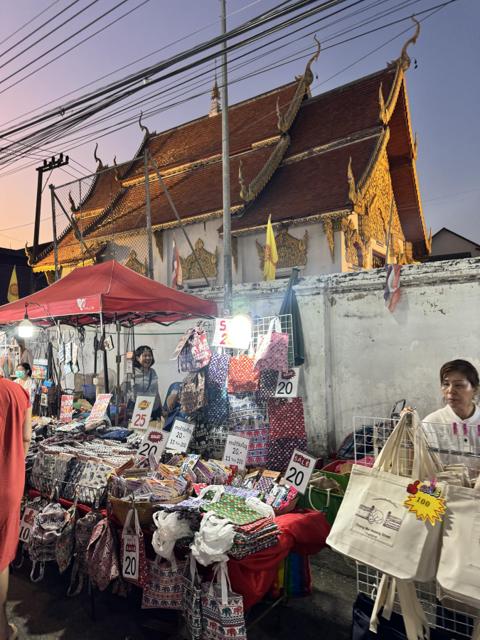
Carry cash. Cards work in hotels, malls and the bigger restaurants. Markets, street kitchens, songthaews and the boat guy do not take them. Keep small notes on you.
Temples have a dress code. Shoulders and knees covered, shoes off where the sign says so. A scarf in the bag solves it, and it is enforced at the big ones.
220 volts, 50Hz. The sockets take flat American pins and European round ones, so the plug usually fits. The voltage is what ends a hair dryer brought from the US. Check the brick before you plug it in.
Internal distances are flights, not drives. Bangkok to Chiang Mai is an overnight train or a short hop; Bangkok to the southern islands is a flight plus a boat. Budget the boat. It is the leg that moves.
Nov–Feb
The whole country is in play.
Mar–May
Hot inland. The Andaman holds through April.
Jun–Sep
Go to the Gulf islands, not Phuket.
Oct–Dec
The Gulf is at its wettest.
Pick your region.
Each region gets its own guide: where to eat, sleep, and spend the days.
Bangkok
Rattanakosin, Yaowarat, Charoenkrung, Thonglor, Ari, and the river that organises all of them. Most itineraries give Bangkok two nights on either side of a beach. It holds four on its own.
Chiang Mai & the North
Chiang Mai, Chiang Rai, Pai, Mae Hong Son. Cooler nights, mountain roads, and a kitchen of its own: northern food is not the food you ate in Bangkok.
The Andaman Coast
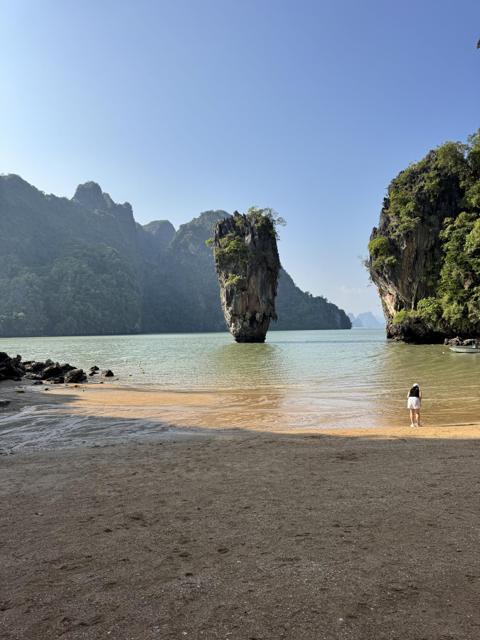
Phuket, Krabi, Railay, Khao Lak, Koh Lanta, Koh Lipe. The limestone coast on the west side, dry from November through April, and much bigger than the two islands it gets reduced to.
The Gulf Islands
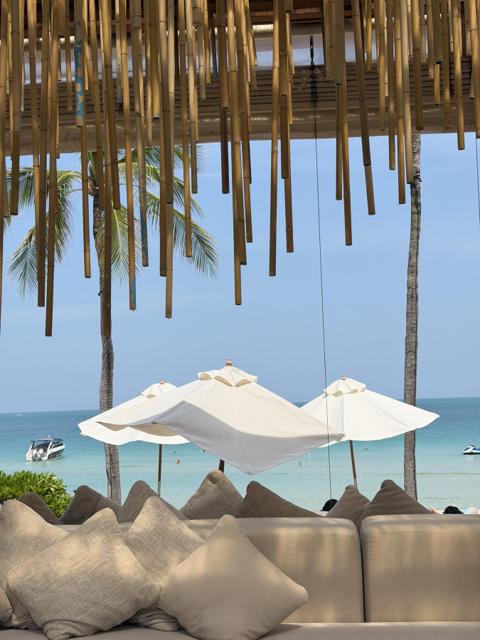
Koh Samui, Koh Phangan, Koh Tao. The other coast, with the opposite rainy season. These are at their driest through the months the Andaman is wet, which makes them the answer for a summer trip.
We can take it from here.
Tell us where you're going, how you like to travel, and what your budget looks like. We'll send back something worth packing for.